Last Updated: April 18, 2025
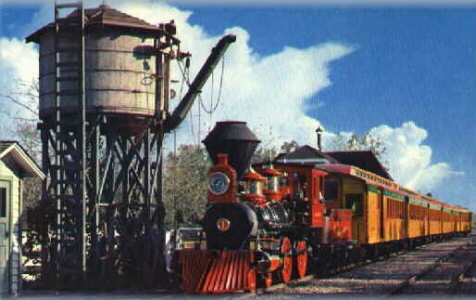
A Scaled down model of a passenger train of another era puffs out of the depot to take you on a scenic tour

Like much of the rest of Disneyland the railroad was built slightly smaller than full size both the train and its tracks are about five eighths scale making its cars 3 feet narrower than standard train cars. It's doorways closer to 6 ft tall than 7 its track about 36 inches wide instead of standard 56 and 1/2 friendlier and less intimidating.
Roger E. Broggie, master machinist at Disney Studios, was familiar with fabricating small camera parts with precision. Walt approached him to create a 1/8 scale live steam locomotive while training Walt as a machinist.Since the first spark of the idea of the park which would later evolve into Disneyland, each design concept held one thing in common "and it will be surrounded by a train." Walt Disney said
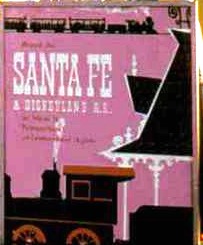
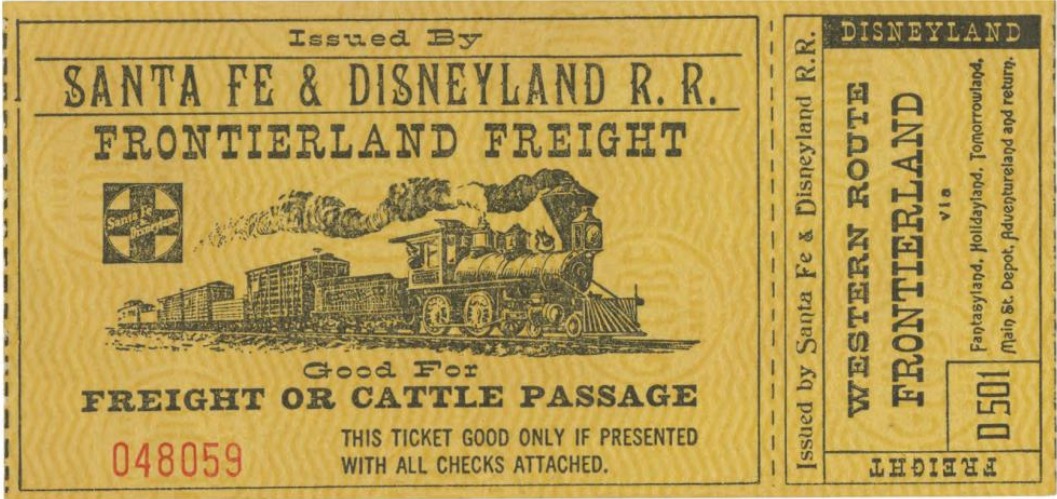
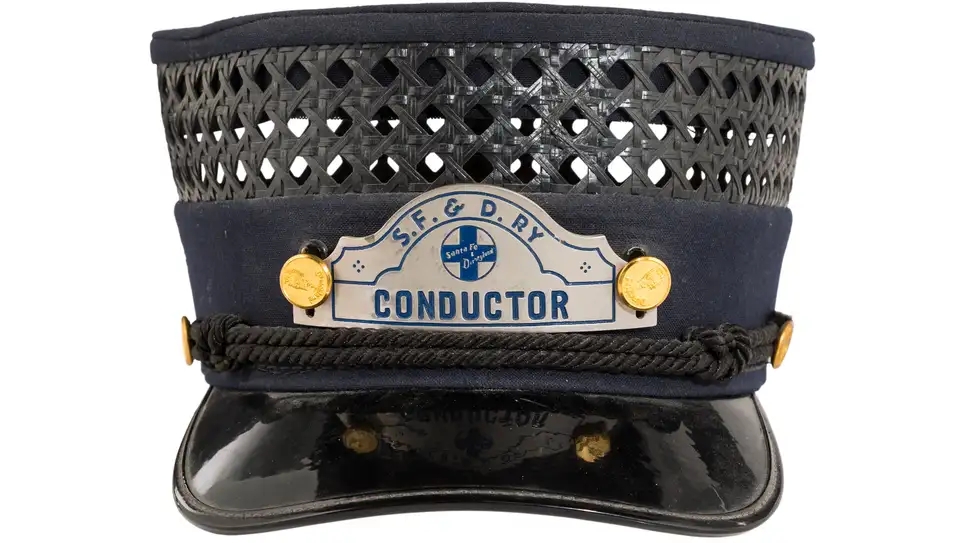
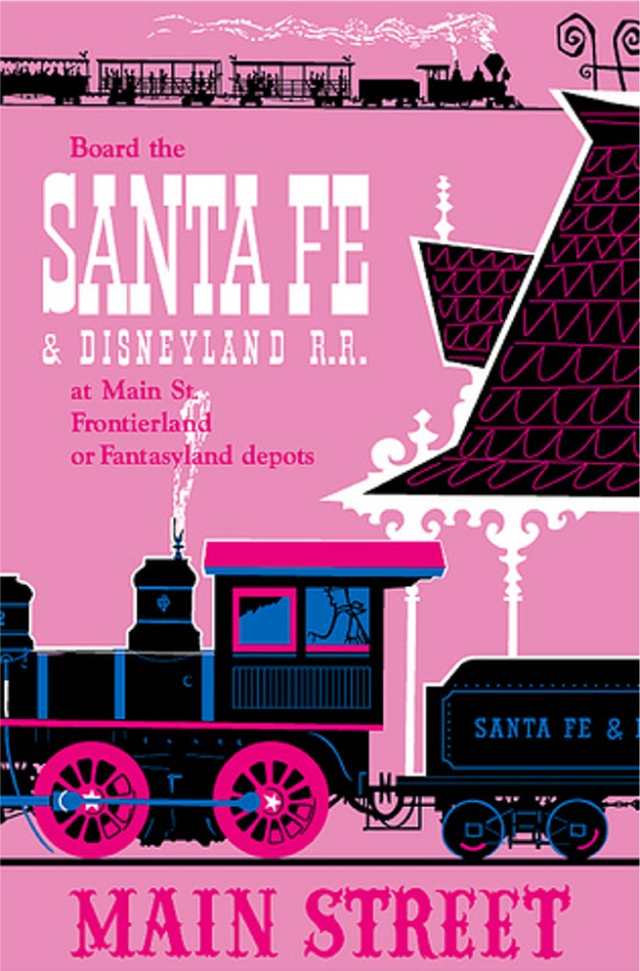
The Disneyland Railroad was inspired by Walt Disney's love for trains, while tinkering in the barn of his live steam backyard Carolwood Pacific Railroad.In 1953 the Walt Disney Company solicited major railroads for corporate sponsorship of the attraction. The Atchison, Topeka, and Santa Fe Railway was the only company to respond. AT&SF sponsorship offset construction and fabrication costs and it opened and operated as the "Santa Fe & Disneyland Railroad" until 1974.One consequence of the sponsorship is from 1955 to 1974 the Santa Fe Rail Pass was able to be used in lieu of a "D" coupon to ride the train.Unlike most of Disneyland and its arrangement with its sponsors, the Disneyland Railroad, as well as the Mark Twain Riverboat (and later the Monorail) was entirely owned and operated by Walt himself as owner,president and sole proprietor of Retlaw which is Walter, spelled backwards incorporated privately for the operation. He mortgaged his Palm Springs property Smoke Tree Ranch to finance the construction of the Disneyland Railroad, Mark Twain Riverboat (and later the Monorail) cast members worked directly for Walt, and he personally autographed their paychecks. Retlaw originally custom-built all of its full-scale 3 ft narrow gauge equipment in house, through creative financing paying his other companies for the work.
In addition to the unpowered rolling stock, WED Enterprises constructed the original two locomotives in the roundhouse at Disneyland then located west of Holidayland under the supervision of Roger Broggie, the first Imagineer, on a temporaryreassignment from the duties of Machinist/Engineer at the Disney Studios Camera Shops.
The locomotives are examples of "American"-style 4-4-0s. Using the 1/8 scale miniature Carolwood Pacific #173 Lilly Belle live steam locomotive which Walt commissioned Broggie to fabricate for his backyard as a pattern, the #1 and #2 locomotives were scaled up from the practical 1/8th live steam model enlarged to full-scale 3 ft narrow gauge Disneyland Railroad trackage, visually similar to the proportion of five-eighths Standard Gauge.
The fire tube boilers are fired by spraying and igniting fuel oil onto a carbon based ceramic fire-brick plate burner.Locomotive No. 1 was given a big spark arresting diamond stack of wood-burning locomotives and a large, pointed pilot or cowcatcher representing a workhorse used to construct a railroad.Flagship No. 2 was given a straight stack and smaller pilot common to East Coast coal-burning locomotives representing highball speed of express passenger service on smooth straight rails.
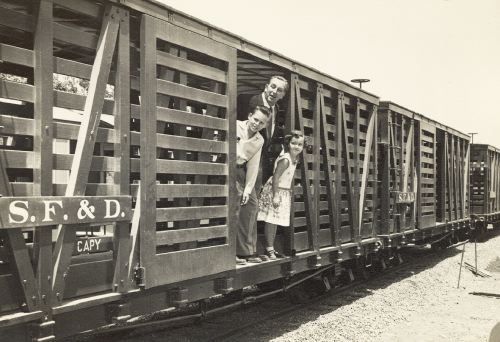
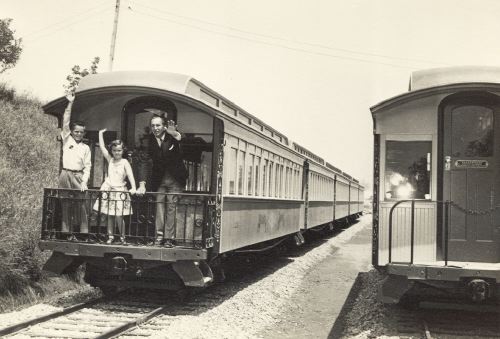
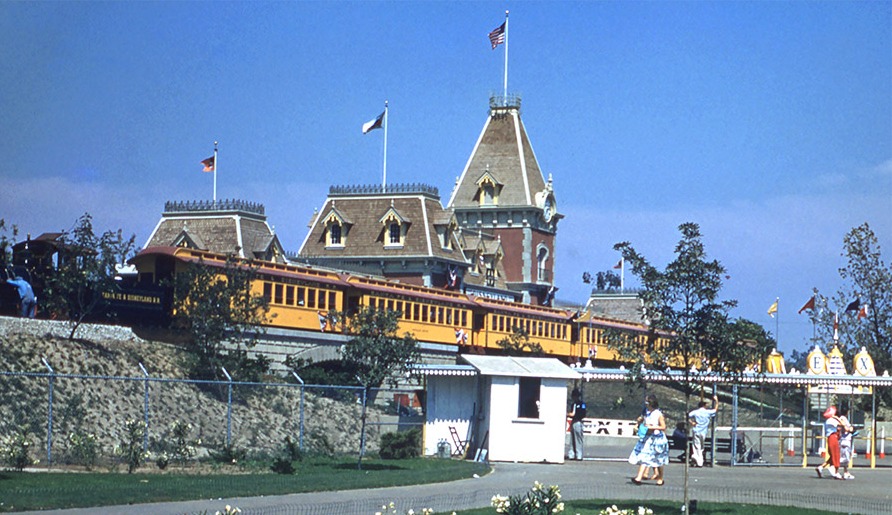
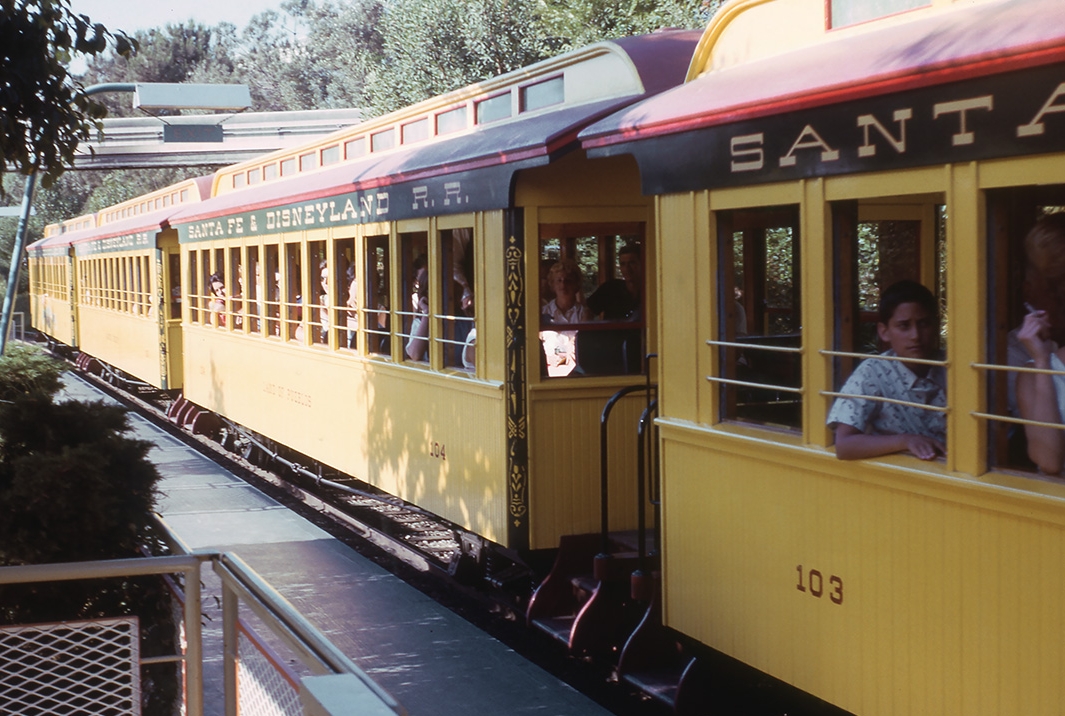
From safety and signaling to conductors punching passenger tickets with a smile, all aspects of operations were just like the big ones. Two trains operated on opening day. Locomotive #1 serviced the Frontierland depot, hauling a freight train consisting of cattle cars, gondolas numbered 201-205 and a caboose #208. Locomotive #2, serviced only Main Street station; it hauled a passenger train consisting of yellow coaches, #101 - the combine, partial baggage/express and coach seating, coaches #102-105, and the Grand Canyon observation coach #106 with larger arched windows, an observation platform and drumhead at the rear. The two trains could each operate on the railroad simultaneously and independently in the same clockwise direction. Rail sidings at Main Street Station and Frontierland Depot allowed them to pass the one disembarking/embarking passengers.
July 17, 1955, beginning the historic ABC broadcast with Art Linkletter and Ronald Reagan on the platform as Walt throttled down #2 pulling Retlaw-1 into Main Street Station, Art introduced him along with California Governor Goodwin J. Knight and Fred G. Gurley in his capacity as president of the Santa Fe and their families riding in the open door of the combine #101 as they began to preside over the opening-day ceremonies.
When the tracks were realigned to accommodate "It's a Small World" the Fantasyland station was closed and the Tomorrowland station was built. The passing track at Main Street Station has been disconnected and now is only used to display a 3 ft narrow gauge Kalamazoo handcar.The tracks at Frontierland Depot were moved several times and the passing track was removed completely; the original station was moved across the tracks and the New Orleans Square/Frontierland station replaced it. Walt Disney dictated that two trains were to operate at all times, and it is not uncommon for three or four trains to operate simultaneously on busy days. Walt's railroading hobby qualified him with extensive experience operating steam locomotives and guests frequently saw him making rounds of the park acting as engineer in a locomotive cab. As the park had grown, and ridership increased, more trains were needed. When more trains were eventually added the operation was changed: the trains no longer passed each other, and a Fantasyland station was built at Storybook Land.
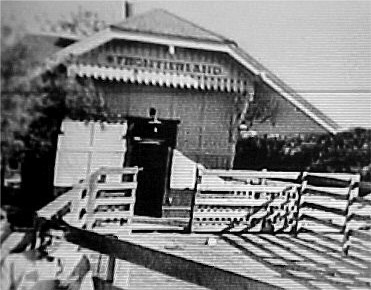
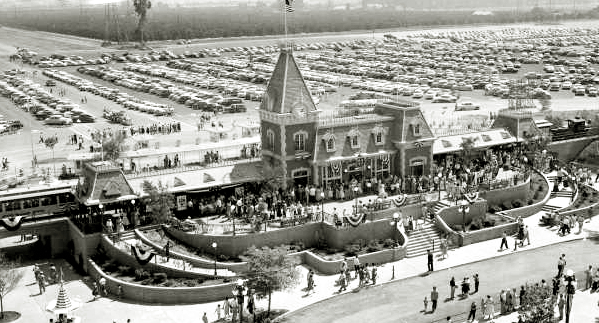
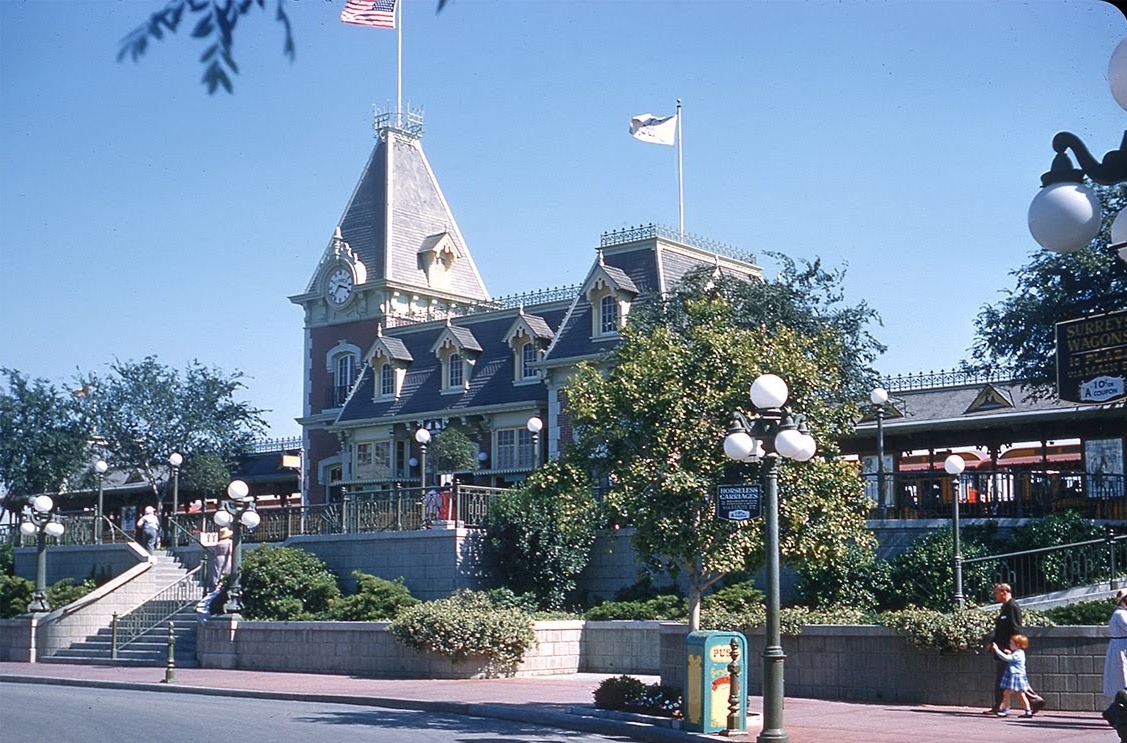
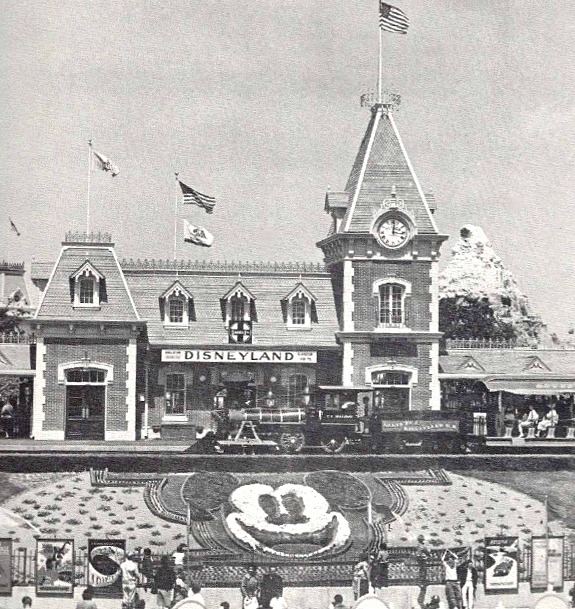
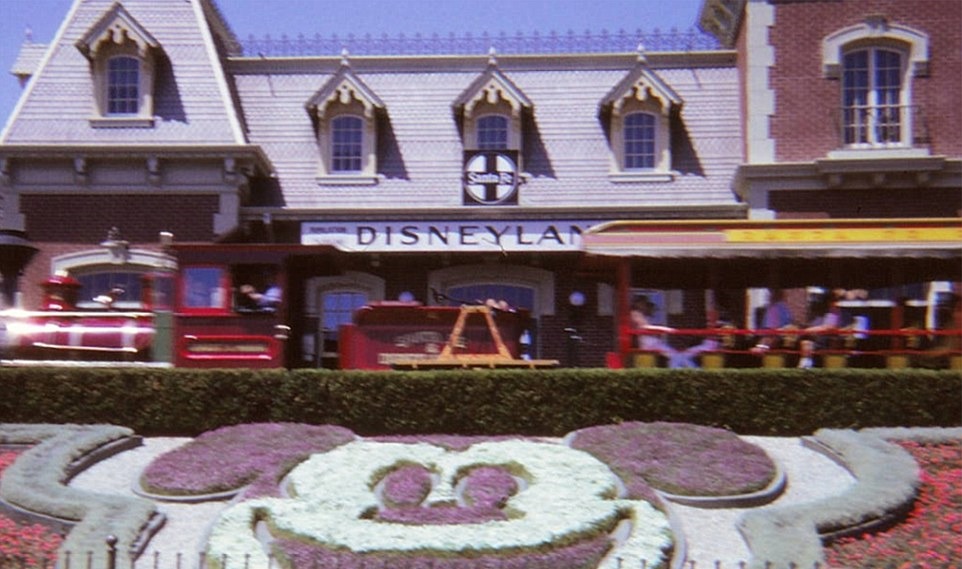
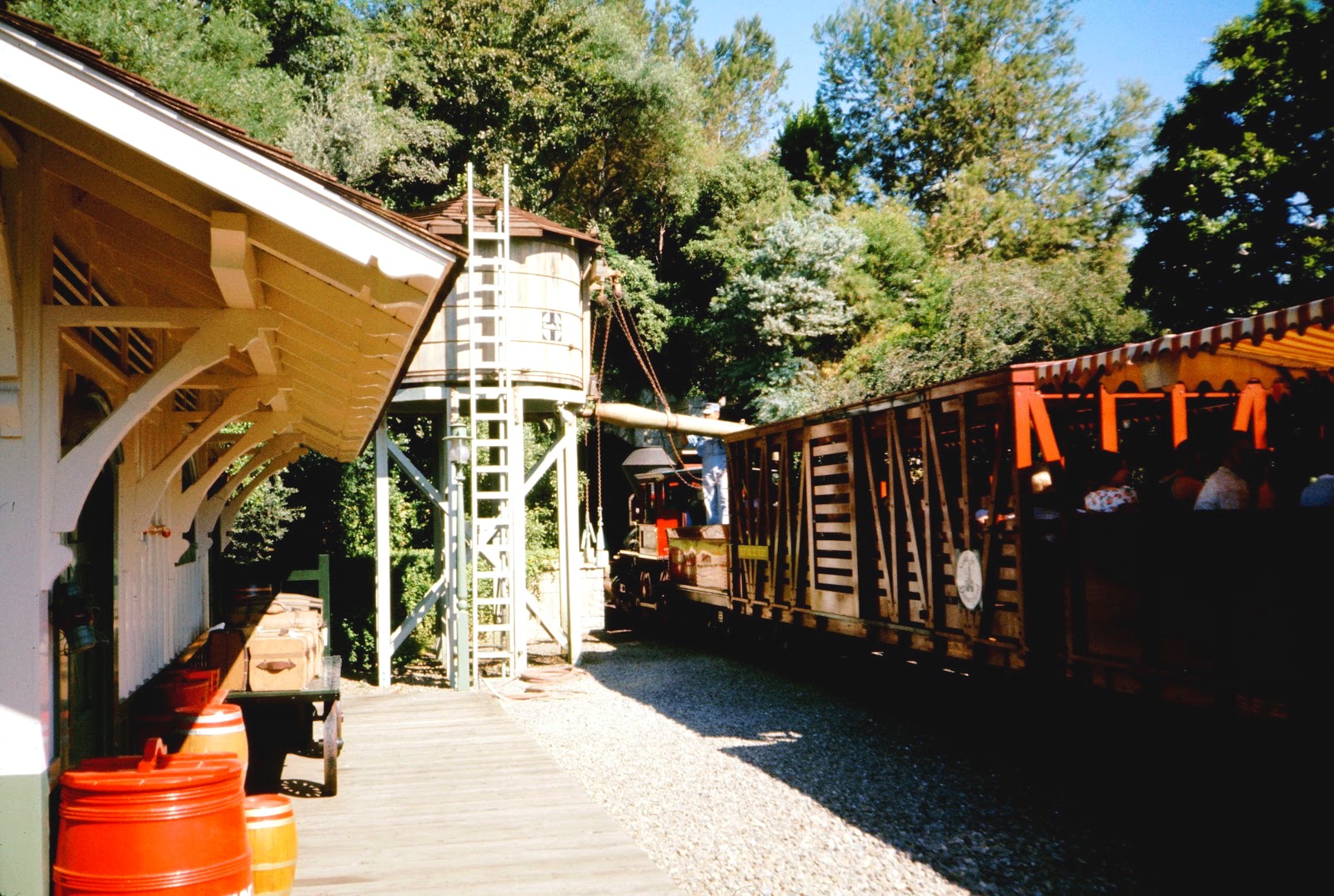
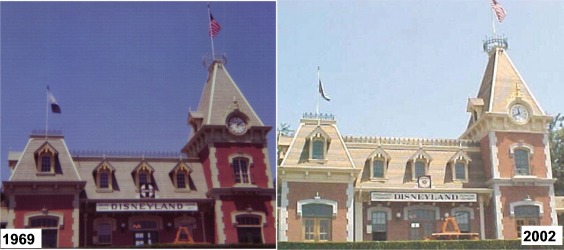
The Main Street station is a typical 1900-era brick structure with gabled roof, cupolas and the Town Clock. Inside, the "Lilly Belle" the scale model locomotive which once circled Walt Disney's home is on display.The Frontierland station is a frame building housing a clattering telegraph office and baggage handling facilities. In new Tomorrowland, guests board trains of the Santa Fe Disneyland Railroad for a journey through the Grand Canyon and Primeval World.
From WED Disneyland Dictionary 1968 Includes five trains, all of 1890 vintage or older. They depart regularly from the Main Street station at Disneyland Main Entrance for a trip completely around the "Magic Kingdom" with stops at Frontierland and Tomorrowland. Each land is viewed on the 1 1/4-mile journey, climaxed by a trip through the Grand Canyon and Primeval World.
Specs: Capacity 2384 per hour -- Cycle Time 17:30 -- Trip Time 12:00 -- Trips per hour 10 --Distance TRaveled 6215 feet -- Speed 4 MPH
When Walt built Disneyland, he wanted complete control over the steam trains, so that he could take them out when ever he wanted. Thus, he placed the steam trains, and then later the monorails under the ownership of Retlaw and leased them back to the park. In 1982, the family decided to sell the assets of Retlaw to the Disney Company, and a holding company, Walt Disney Incorporated was formed. Eventually, the steam trains and monorails became "officially" Disneyland's property.
Locomotives: Four steam locomotives are used on the S.F. & D. They all are petroleum fuel burners.
Steam Train #1:
Engine: CK Holiday
Named For: Cyrus Kurtz Holliday (1826-1900). Founder of the Atchison and Topeka Railroad (Santa Fe's predecessor) in 1859.
Builder: Built by Disney machinists headed by Roger Broggie for $100,000 ($1.2 million in 2021 dollars)
Inservice At Disneyland: July 15, 1955
C. K. Holiday (4-4-0) was patterned after locomotives used in the mid-1800's. Designed specifically for Disneyland by WED Enterprises, this locomotive has a large diamond stack on the boiler which is similar to those used widely on wood-burning engines between 1860-1890.
Steam Train #2:
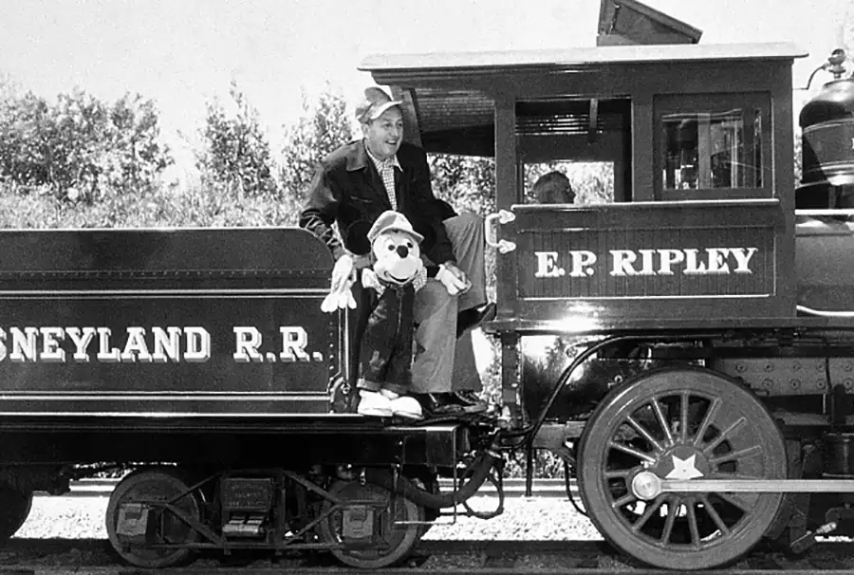
Engine: EP Ripley
Named For: Edward Payso Ripley (1845-1920). First President of the reorganized Atchison, Topeka and Santa Fe Railway in 1895.
Builder: Built by Disney machinists headed by Roger Broggie for $100,000 ($1.2 million in 2021 dollars)
Inservice At Disneyland: July 15, 1955
E. P. Ripley (4-4-0) was built simultaneously with the C. K. Holiday for service beginning on Disneyland's opening day in 1955. This locomotive is characteristic of those used during the mid-1800's. The capstack on the boiler is the type that was used on coal-burning engines of that period.
Steam Train #3:
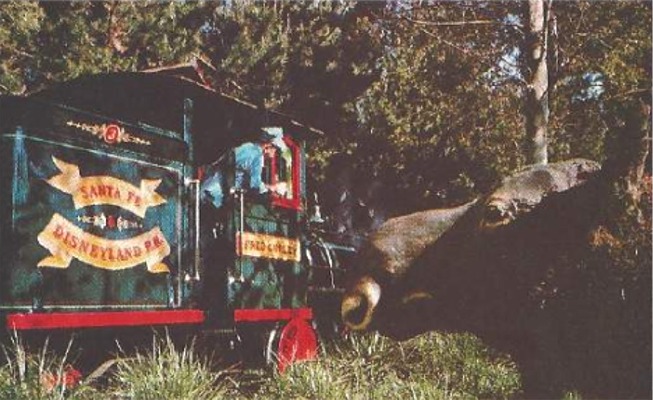
Engine: Fred Gurley
Named For: Fred Gurley . Chairman of the board Santa Fe Railroad.
Builder: Built by the Bladwin Locomotive Works in August 1894.
Inservice At Disneyland: March 28 1958
Fred Gurley was purchased by Walt Disney for $1,200 ($12,000 in 2021 dollars) from the Godchaux Sugar Company in Louisiana. In 1957, the locomotive, originally used to haul sugar cane from plantations to shipping docks in New Orleans, was brought to the Walt Disney Studios in Burbank, California. Studio designers restored, refurbished the train. This locomotive, characterized by a capstack, was first used at Louisiana sugar plantations before being rebuilt by WED Enterprises for Disneyland service.
Steam Train #4:
Engine: Ernest S. March
Named For: Ernest S. Marsh (1903-1975). President of the Santa Fe Railway from 1957-1966, strong advocate of the Santa Fe and Disneyland relationship.
Builder:Built 1925 for Raritan River Sand Company
Inservice At Disneyland: July 25 1959
Ernest S. March Purchased by Walt Disney for $2,000 ($19,000 in 2021 dollars). Ernest S. March (2-4-0) (1959) sports a diamond stack cinder trap. This locomotive was built in 1925 and used in New Jersey lumber mills; re-built completely by WED Enterprises for Disneyland service.
Trains:
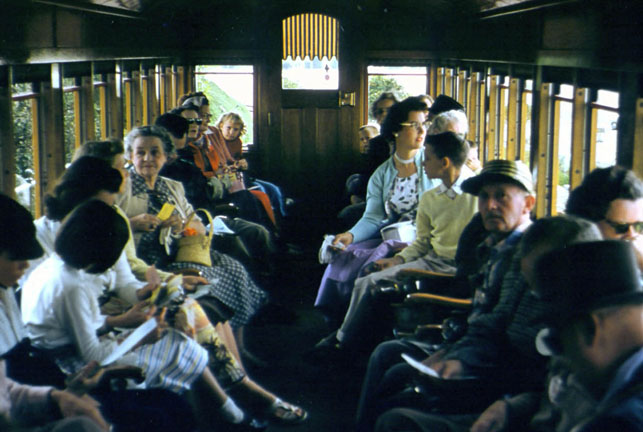
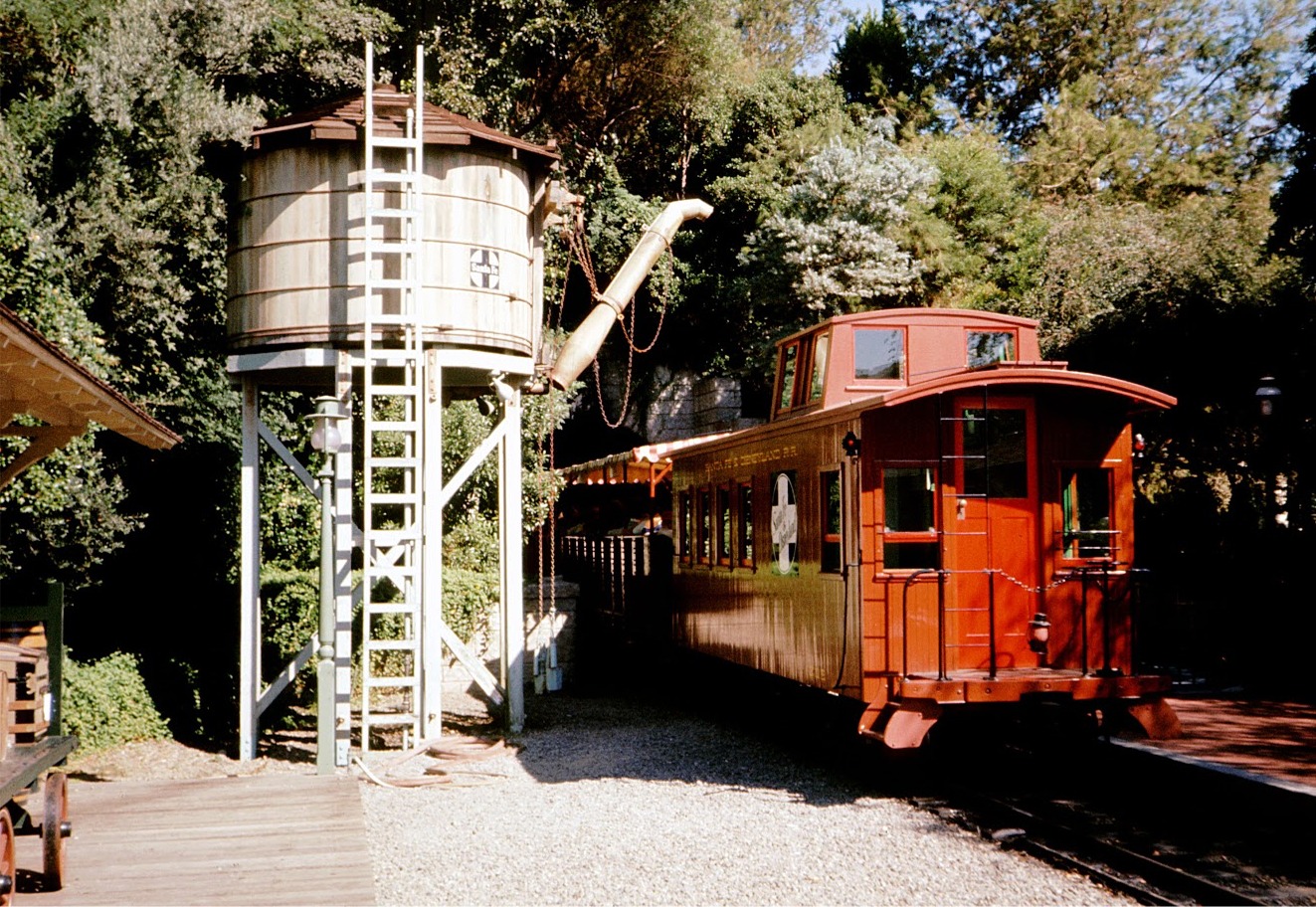
1. Passenger Train is a replica of Santa Fe passenger trains of the 1890 era which were lavishly decorated and furnished for dignitaries and politicians touring the country.
2. Holiday Red Train (re-designed 1958) is a replica of trains which carried the riches of the West to eastern markets. Styled after "River Trains" with open cars, all seats face one side of the train. Each car is decorated with red-and-white-striped canopies.
3. Excursion Special Train (1958) is an open-air touring train typical of those used in the East for excursion trips before the turn of the century. They were known as "Narragansett cars."
4. & 5. Holiday Green & Holiday Blue Trains. (1966) are patterned after the "River Trains"-styled Holiday Red. These trains are identical except for different colored striped canopies and car numbers. The Main Street station is a typical 1900-era brick structure with gabled roof, cupolas and the Town Clock. Inside, the "Lilly Belle" -- the scale model locomotive which once circled Walt Disney's home -- is on display. The Frontierland station is a frame building housing a clattering telegraph office and baggage handling facilities. In new Tomorrowland, guests board trains of the Santa Fe Disneyland Railroad for a journey through the Grand Canyon and Primeval World.
Nomenclature May 25 1955:
Freight Cars and Equipment Equipment Numbering System:
201 series Box cars
301 series Stock cars
01 series Gondolas 501
series Caboose 51
series Old time 2-man hand car
61 series Old time 1-man "Irish Mail"
71 series Motor scooter
81 series Push car
Wells Fargo Express & Baggage: Coach #101
Navajo Chief I: Coach #102
Colorado Rockies: Coach #103
Land of Pueblos: Coach #104
Painted Desert: Coach #105
Grand Canyon Observation: Coach #106
Original Stations: Main Street and Frontierland. Fantasyland station added in 1956 and Tomorrowland station added in 1958.
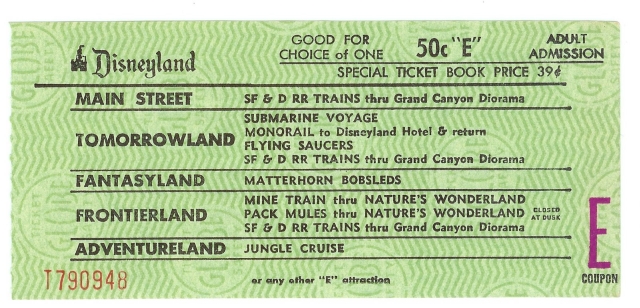
Required a "C" ticket in 1955
In 1956 the phone extension for Main Street Station was 398
Required a "D" ticket in 1956-1957
Required a "E" ticket in 1959
Required a "E" ticket in 1964-1965
From WED Disneyland Dictionary 1968
Includes five trains, all of 1890 vintage or older. They depart regularly from the Main Street station at Disneyland Main Entrance for a trip completely around the "Magic Kingdom" with stops at Frontierland and new Tomorrowland. Each land is viewed on the 1 1/4-mile journey, climaxed by a trip through the Grand Canyon and Pitimevat Woad. Track gauge is 36 inches. Cars are 5/8 scale.
Required a "D" ticket in 1970's

 Access To Over 3240 Construction Photos