Good Old Boy Secret A Look Inside Disneylands Private Mens Club
ID:
TMS-5940
Source:
SFGate
Author:
Julie Tremaine
Dateline:
Posted:
Status:
Current
Ah, the Disneyland of old, when people really dressed the part. Men wore suits and hats in the theme park. Women wore dresses, stockings and high heels. If you know the exhaustion of a park day in athleisure wear and sneakers, imagine what it was like in 3-inch heels. And while those ornately outfitted women were running around chasing their kids in the scorching Anaheim heat, the men were … enjoying the spa?
It might seem unbelievable now, but there was a time when the Disneyland Hotel had a men’s-only members club, the Oak Room, which included a private restaurant and spa.
“It was like a good-old-boy secret that they didn’t do a lot of talking about,” Don Ballard, author of “The Disneyland Hotel: The Early Years, 1954-1988” and “The Disneyland Hotel 1954-1959: The Little Motel in the Middle of the Orange Grove,” told SFGATE by phone.
Located in the hotel’s “Restaurant Row,” which is now the area of Downtown Disney around Din Tai Fung and the western security gates, the Oak Room was loosely modeled after an English pub. Over the distinctly midcentury red leather banquettes and tables with red tablecloths with red floral arrangements, of course the dark wood paneling showcased carved wooden signs that evoked old British pub signs. There was a gold-accented deer carving that said “The White Hart,” a shield with a three-masted galleon that said “The Ship,” and a yellow circle emblazoned with “Ye Olde Cheshire Cheese.”
Membership was open to men only, though details on how to become a member, and how much it cost, have been lost to time. Women were allowed at night as members’ guests, when there was live music and after-dinner dancing. But during the day, when businessmen needed to attend to important business matters, the Oak Room was strictly for the gents.
The menu offered classic steakhouse fare, including bacon-wrapped chopped sirloin, prime rib au jus and broiled lobster tail. The most expensive thing on the menu was chateaubriand for two, a full steak dinner with five vegetable sides, for a whopping $14.50.
A mid-1960s Disneyland financial report for investors from Ballard’s archive included a photo of the restaurant, saying, “Providing the luxurious surroundings of a private club, the Oak Room is a popular gathering-place for business discussions over lunch, as well as evenings of informal fun.”
In its heyday, the Oak Room hosted royalty from around the world, including “the king and queen of Nepal, an Iranian prince and princess,” and “Lord and Lady Chamberlain from England,” according to a 1980 article in the Camarillo Star. Richard Nixon apparently liked the place and visited a few times. He and John F. Kennedy both held campaign events there when they were running against each other in the presidential election. The “countless show business greats” included jazz legend Louis Armstrong, who was a member, and composer Hoagy Carmichael. One night, Armstrong and Benny Goodman played an impromptu concert that lasted four hours, former manager Bill Kittle told the Star.
“Famous people enjoyed dining at the club because of its excellent food and privacy,” according to the Star. “Members and guests of the club were not the type ‘who would jump up and ask for autographs,’ Kittle said.”
Many of the most high-powered guests were personally invited by Walt Disney, when he wasn’t entertaining them at his own private club, informally called “Walt’s Hideout,” in Disneyland.
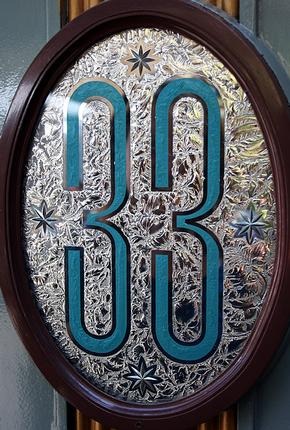
Oak Room pre-dated the ultraprivate Club 33 inside Disneyland by over a decade. Club 33 didn’t open until 1967, and even back then, it was highly exclusive and required park admission. Club 33 also never had a spa where you could sweat out your three-martini lunch. The Oak Room Health Spa was a men’s-only facility with a sauna, hot tub and exercise facilities.
An undated article from Disneyland Hotel Check-In, the hotel’s magazine that ran from 1965-1973, described exactly why a man might need a private spa visit.
“You’ve just arrived after a long trip,” the article read. “The kids and wife are all rested and ready to hit Disneyland for hours of fun and walking, but you did most of the driving and man alive, you’re half dead.
“If this describes the current state of your health, here’s a helpful suggestion,” it continued. “Visit the Hotel’s Oak Room Health Spa for Men and renew your vim and vigor. Let the sauna and whirlpool ease those tired muscles. Depend on our expert masseur to remove the rest of the kinks.”
The membership element ended in 1970, and the restaurant was open to the public for a decade more. While other long-gone offerings at the Disneyland Hotel are better remembered like Granville’s, the fine dining restaurant that eventually became the much-missed Steakhouse 55 most of the stories of the Oak Room have been lost to history. Google the restaurant and you’ll barely find a mention; search the robust vintage Disneyland memorabilia offerings on eBay and all you’ll find are a few matchbooks that say “The Oak Room, a gentleman’s private club” with the Disneyland Hotel contact info.
The hotel’s history has not been as carefully preserved, at least publicly, because for its first several decades it wasn’t owned by Disneyland. Whereas the Walt Disney Archives are an enormous department with many employees preserving the company’s history, Ballard is the only person giving the Disneyland Hotel’s early days an in-depth study. (He has a third book, “The Disneyland Hotel 1960-1964 The Little Motel Grows Up,” coming out any day.)
Walt Disney always wanted a hotel attached to his theme park, but when funding proved scarce and there was barely enough money to open Disneyland, he had to outsource. Jack and Bonita Wrather, an entrepreneur and former actress respectively, stepped in; they opened the Disneyland Hotel in October 1955, and the Wrather Corp. owned it until Disney purchased the property in 1988. (Part of the acquisition included taking over the lease to operate the Queen Mary, which Disney tried to turn into a Haunted Mansion at sea.)
When it opened, the Disneyland Hotel was unlike anything else in the area. “The hotel featured conveniences that other hotels did not have,” Ballard explained. “Television, even color television, pools, shops, restaurants, recreation facilities, and that’s not to mention it was right next door to the Magic Kingdom.”
“It was built to be an extension of your Disneyland experience,” he added.
Its convention offerings were a game-changer for family vacations. At the time, it was much more common for men to travel on their own for business trips, leaving their wives and children back home. With a convention hotel adjacent to a theme park, it was much easier to include the whole household.
“It was the start of a new era where the businessman would bring his family to attend conventions,” Ballard said, “because while Dad was at the convention, Mom had the kids at Disneyland.”
Having a private club for high-powered men was likely a move to entice more of them to host conventions there. In fact, it wasn’t Disney’s only men’s-only club. In the 1940s, the Walt Disney Studios in Burbank had gender-specific areas: the women had a tea room on the top floor of the Ink & Paint Building, while the men had the Penthouse Club, on the top floor of the Animation Building.
The luncheon club was open to “any fellow who is decent and respectable,” as Walt Disney described it, according to the Disney History Institute. But more than just a collection of restaurants, the Penthouse Club offered a bar, a barber shop and spa facilities. There were also beds for taking midday naps.
But most notoriously, there was the rooftop. In 1947, New York Magazine described it as a place “where male employees acquire an all-over tan.” According to the Disney History Institute, a former employee said, “We used to take nude sunbaths, on the roof of the Studio, on our lunch hours and 'chew the fat.'” This went on for years until one day, the nuns from St. Joseph’s Hospital across the street finally called and told them what they didn’t know: People in the four-story wing of the hospital, including the nuns, had a clear view of that rooftop.
According to Ballard’s research, the Oak Room either closed in late 1983 or early 1984. The popularity of Sgt. Preston’s Yukon Saloon necessitated an expansion, and the bar and dance hall took over the former Oak Room space. Eventually, all of Restaurant Row was torn down in 1999 for the construction of Downtown Disney. Now, that space holds the security checkpoint connecting the Disneyland Hotel property to Downtown Disney, the former ESPN Zone building and Din Tai Fung.
Restaurants Referenced In This Article:

 Access To Over 3240 Construction Photos








 -
-