Last Updated: May 11, 2026
A walking tour through a modernistic house built of plastics. The house featured all the latest appliances and furnishings.

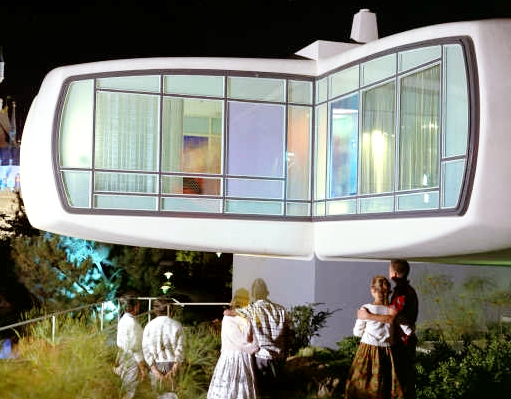
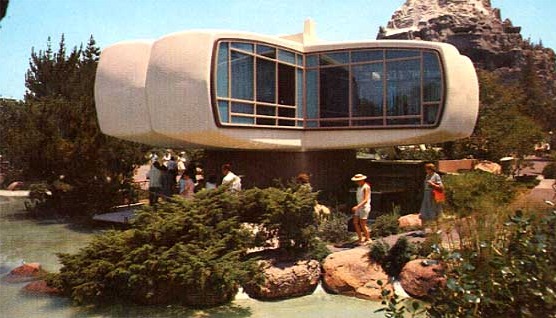
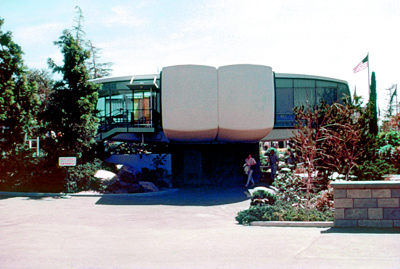
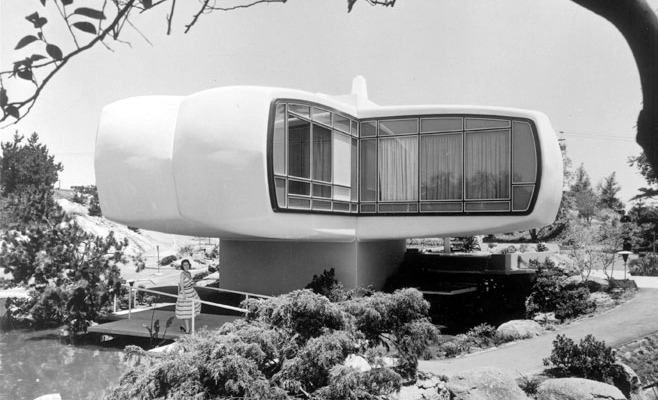
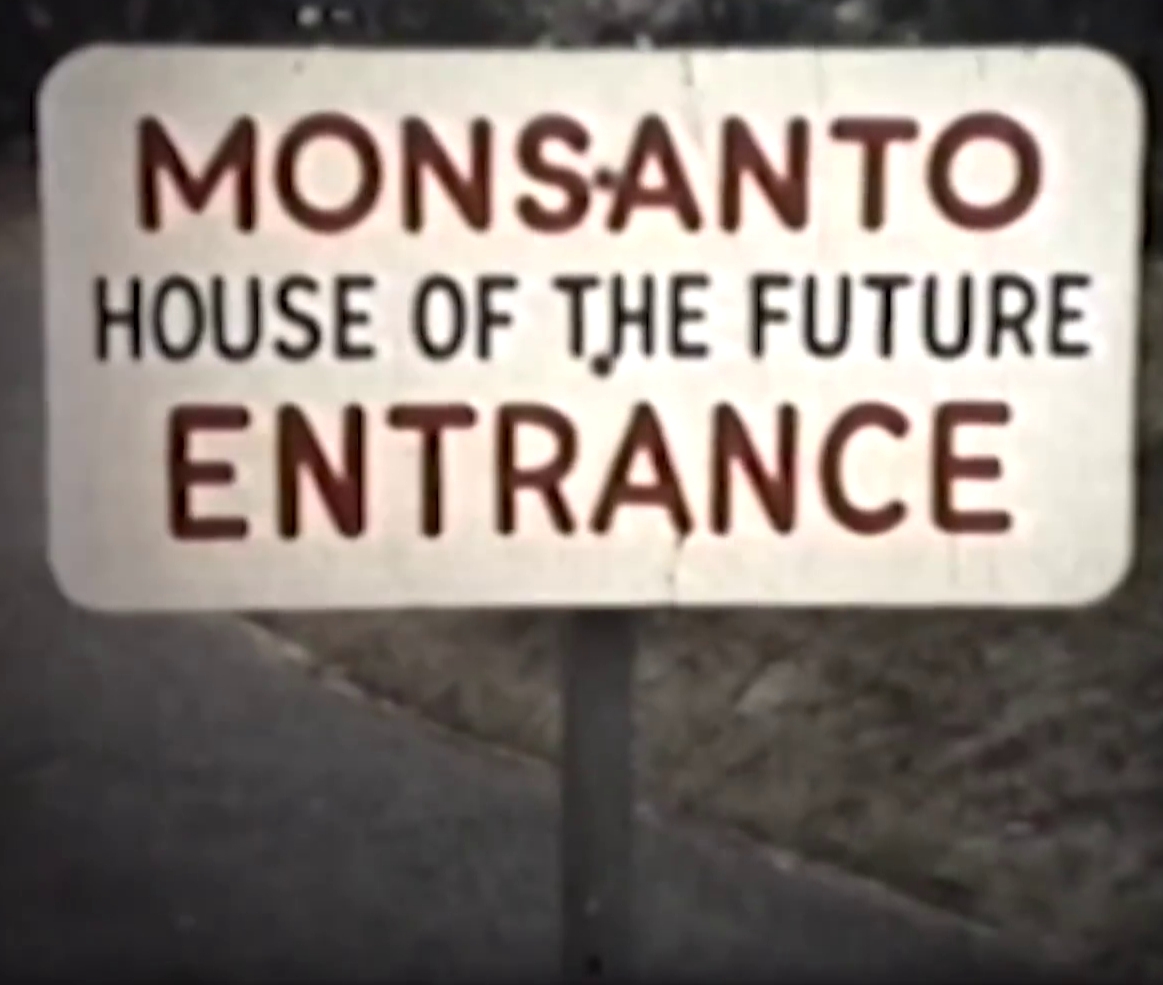
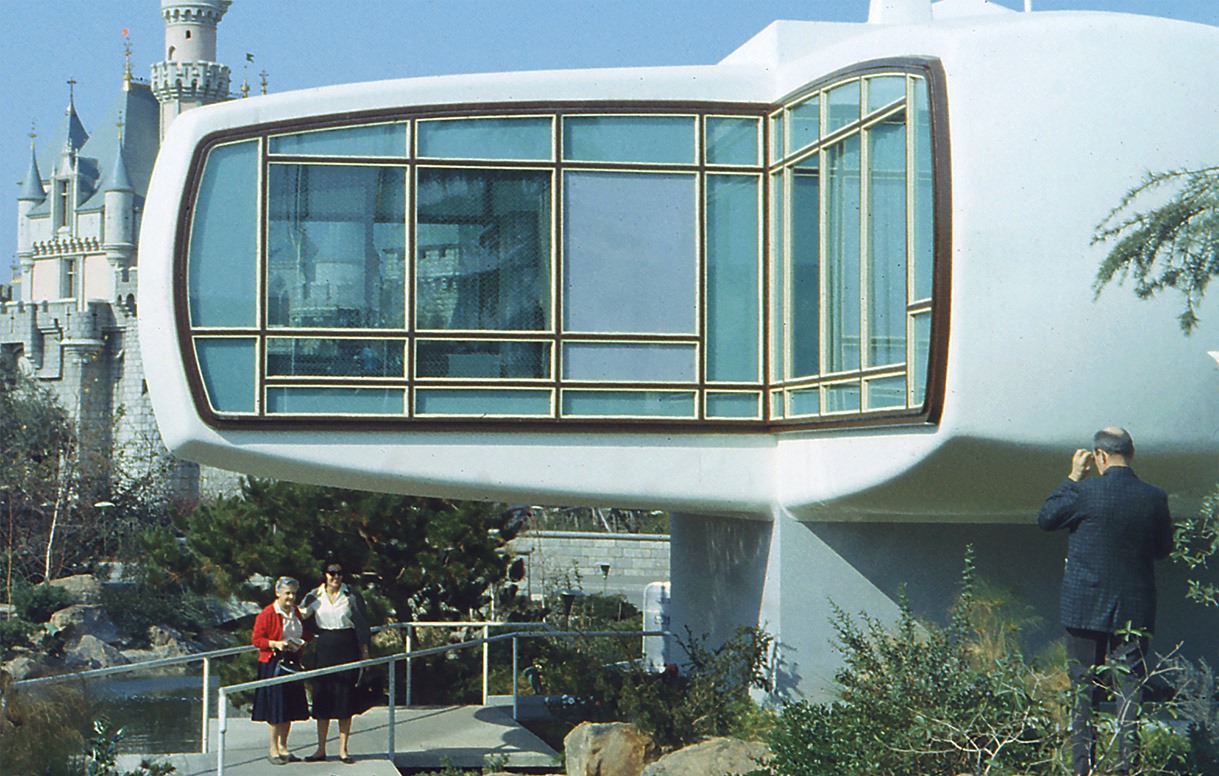
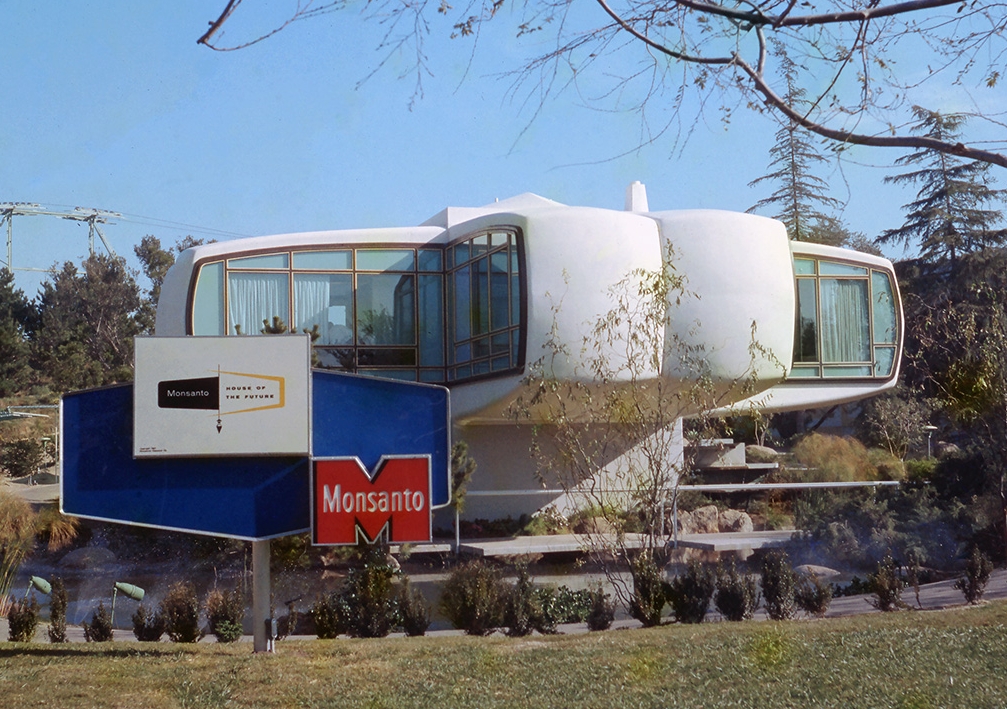
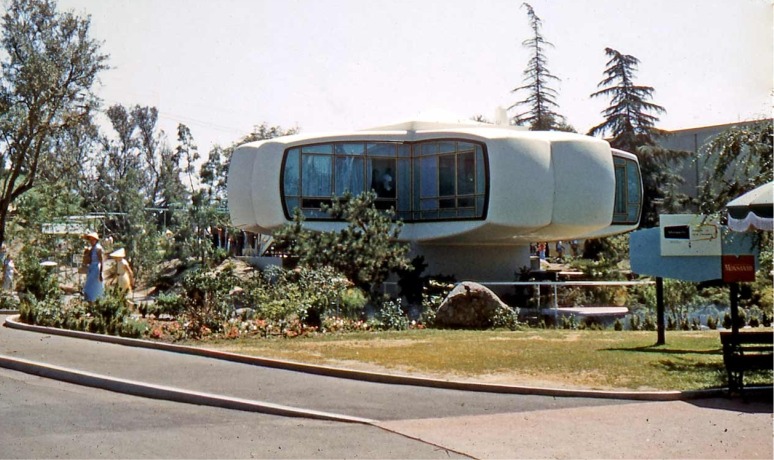
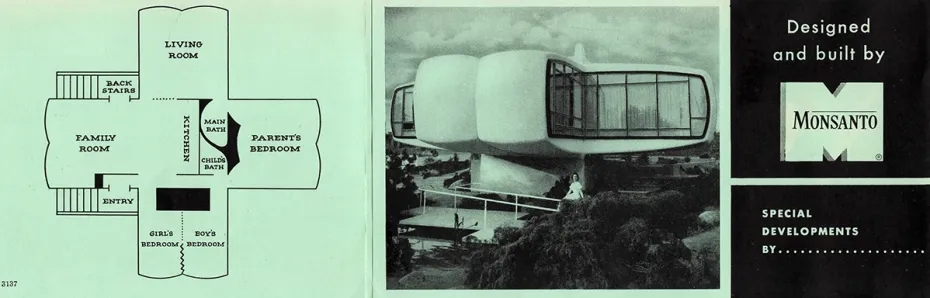
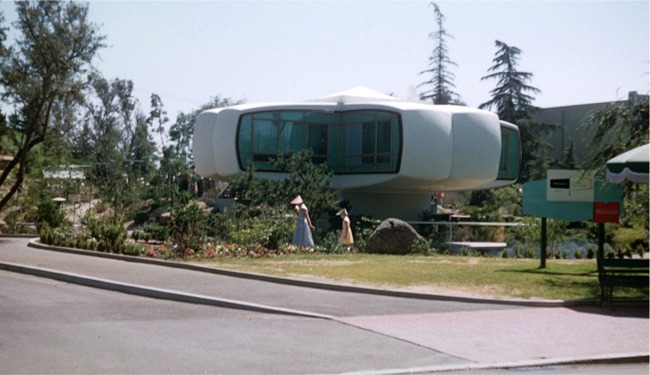
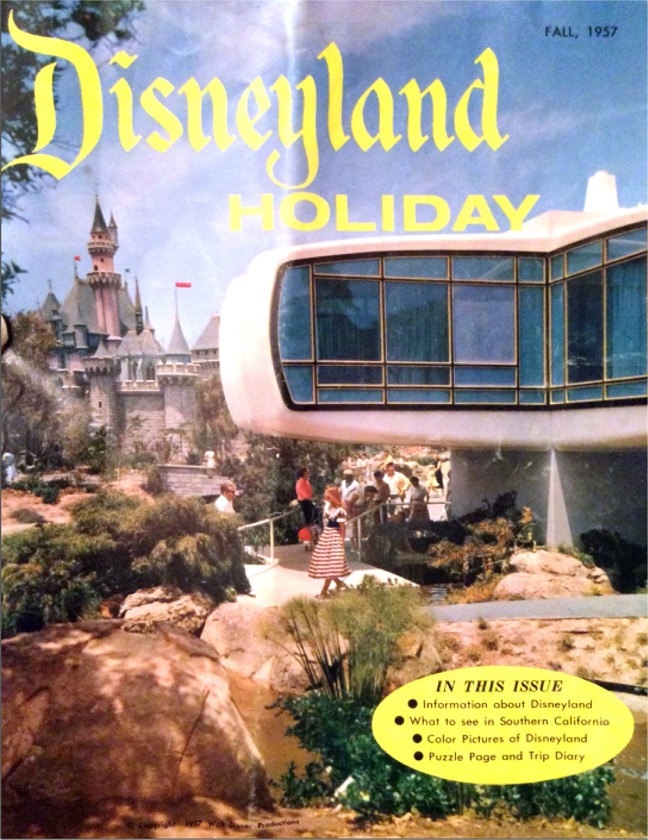
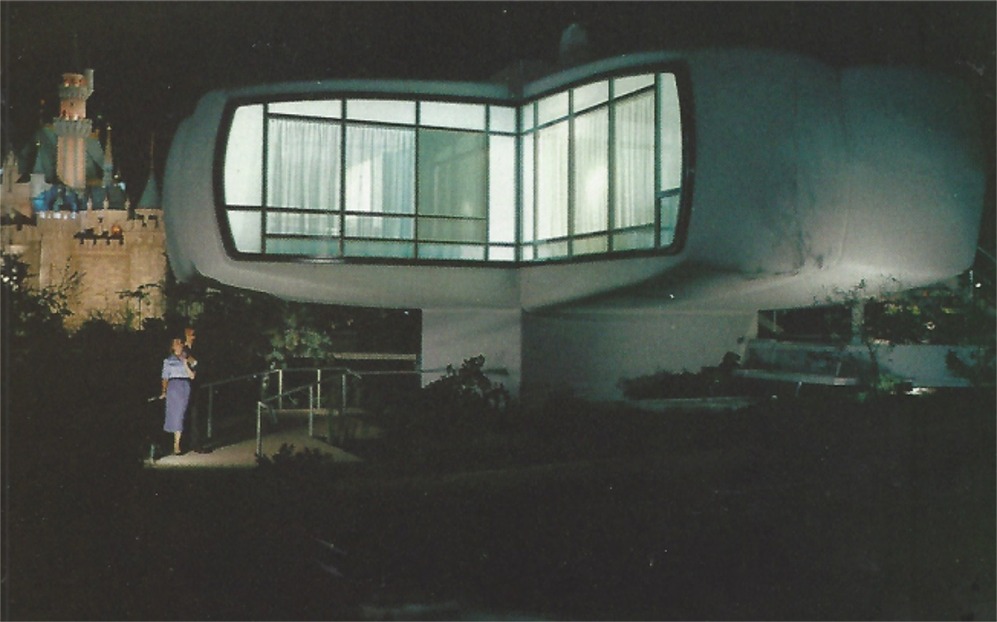
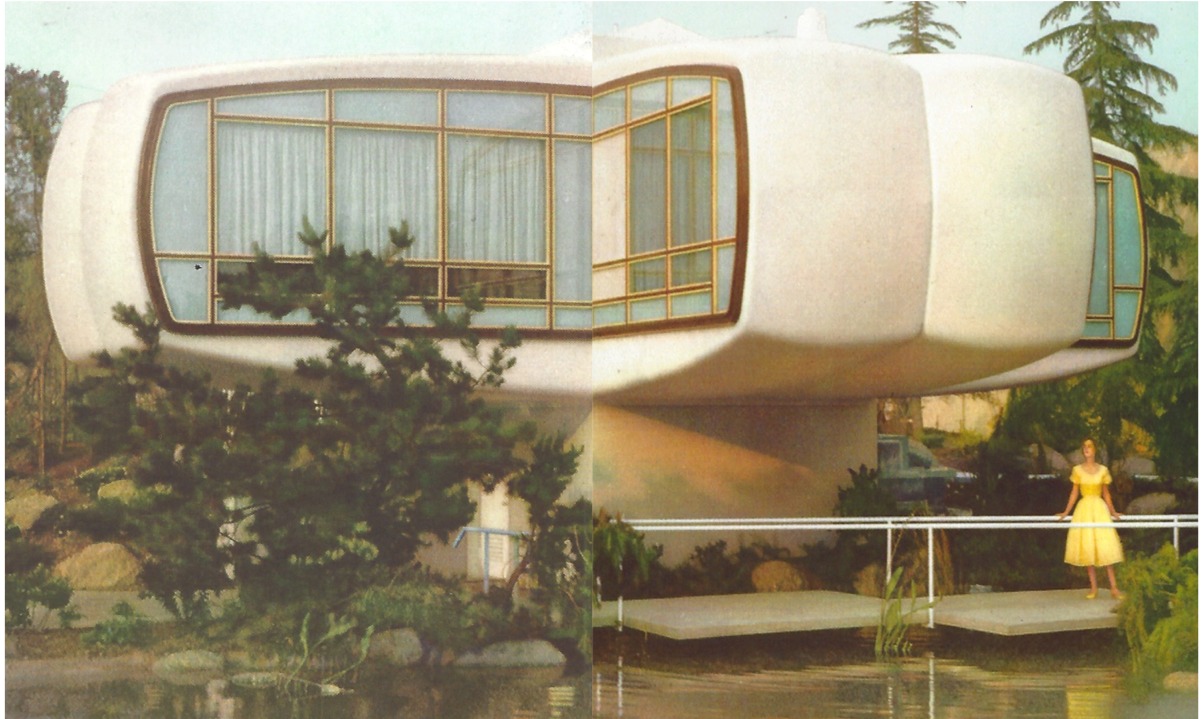
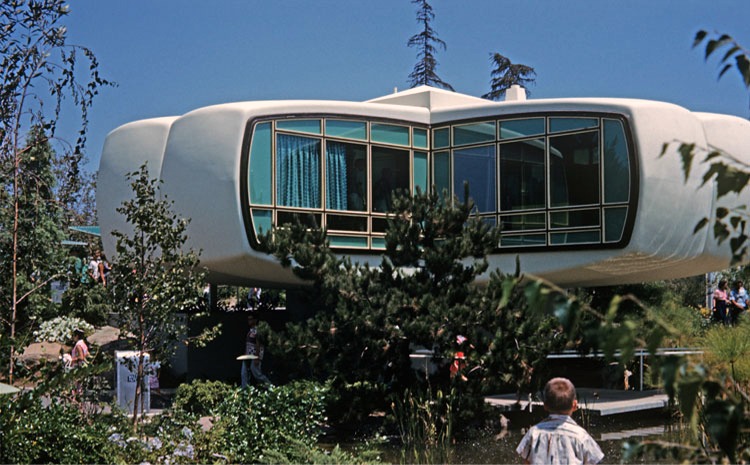
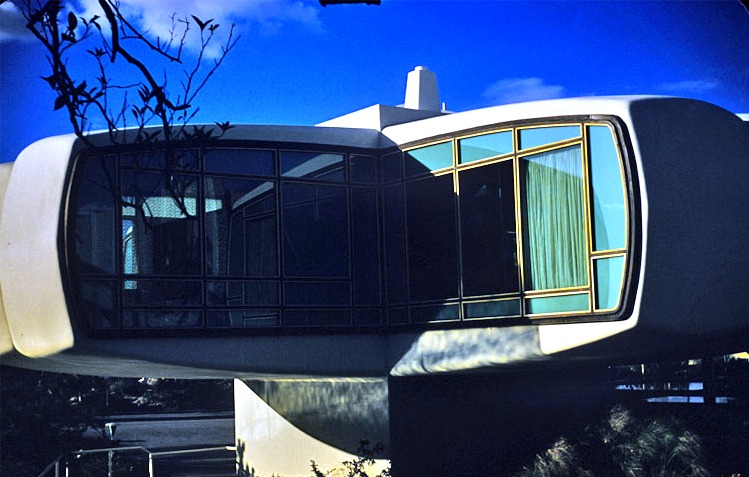
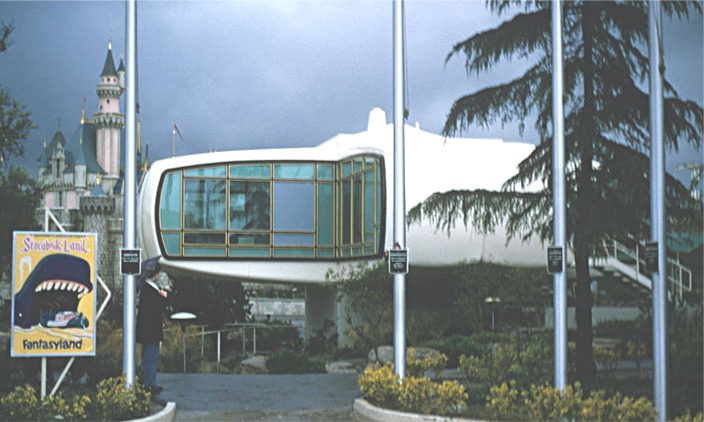
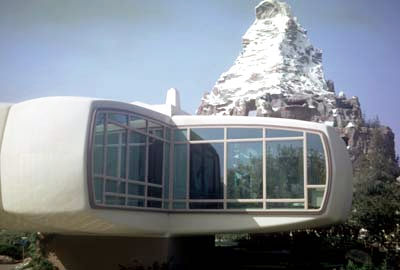
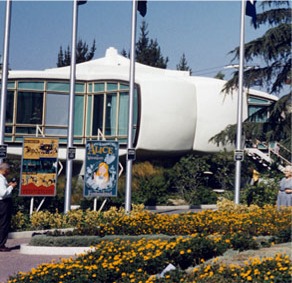
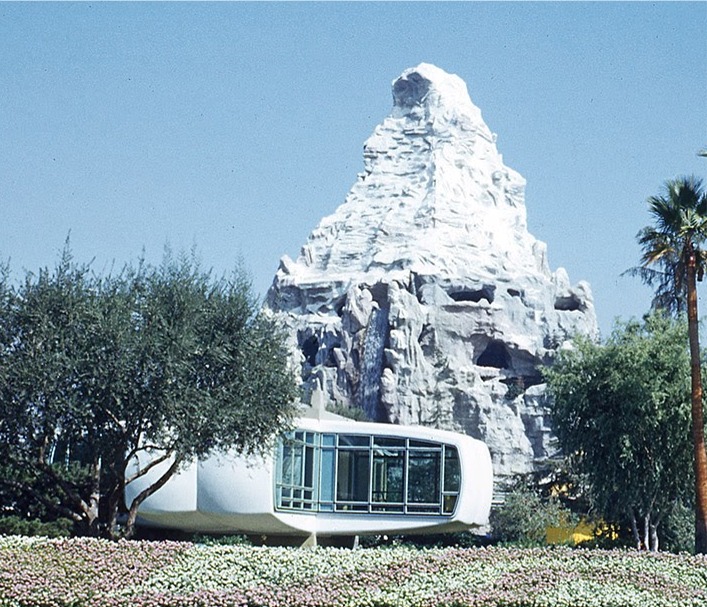
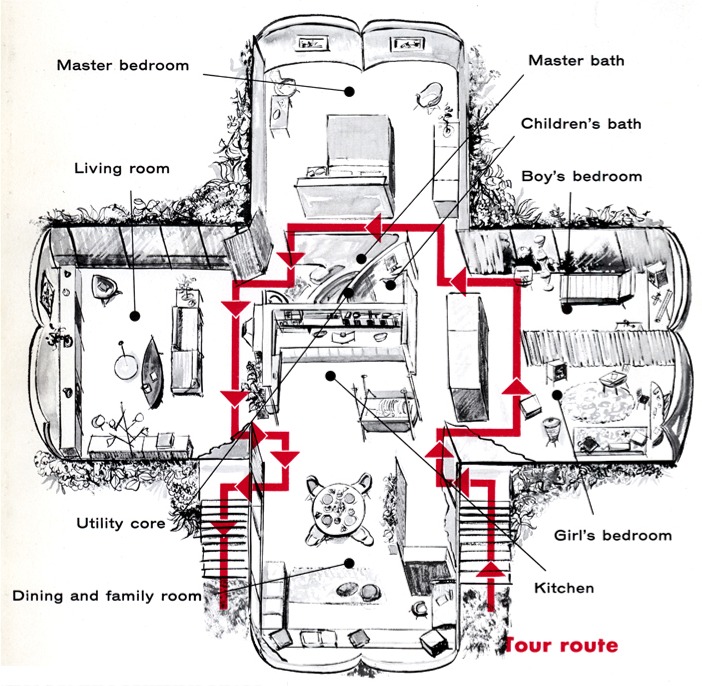
The second Monsanto sponsored attraction at Disneyland the House Of The Future was a free walk-through exhibit located outside the entrance to Tomorrowland the attraction stood on a 256 square foot raised platform surrounded by contemporary gardens in a winding pool. That collectively covered about a quarter of an acre. The pool wasn't just there for aesthetic its water was part of the buildings cooling system. From above the 1280 square foot 3-bedroom 2-bath home was shaped like a graceful plus sign it's four compartmentalize modules were each 8 ft tall and 16 ft long and extended from a central core outwards over open-air.The smooth streamlined modules could be supplemented with additional modules to accommodate the expanding family an optional rotating platform enabled inhabitants to spin their house to face any direction.
During its decade long existence this House of the Future welcomed some 20 million guests more than the entire population of California at the time. Instead of a fun Disney design attraction guests found a serious mass produced tract home designed by MIT and Monsanto Engineers to show off technology advances for Monsanto's plastic division.One of the strengths of the house was in fact, it's strength when it came time to dismantle the entire structure in 1967 engineers discovered that the four extending wings of the house had drooped less than a quarter inch despite all the heavy traffic the two-week demolition had to be done by hand with crowbars and saws because the wrecking ball swung at the house mearly bounced off of its sides.
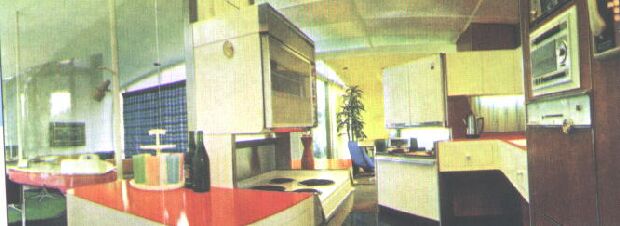
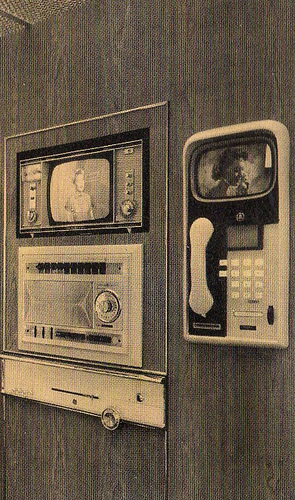
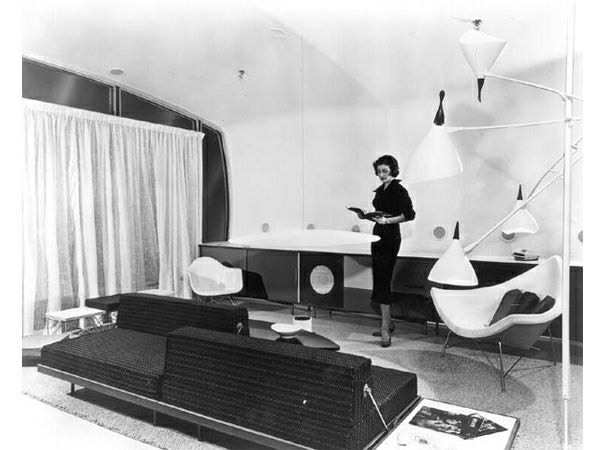
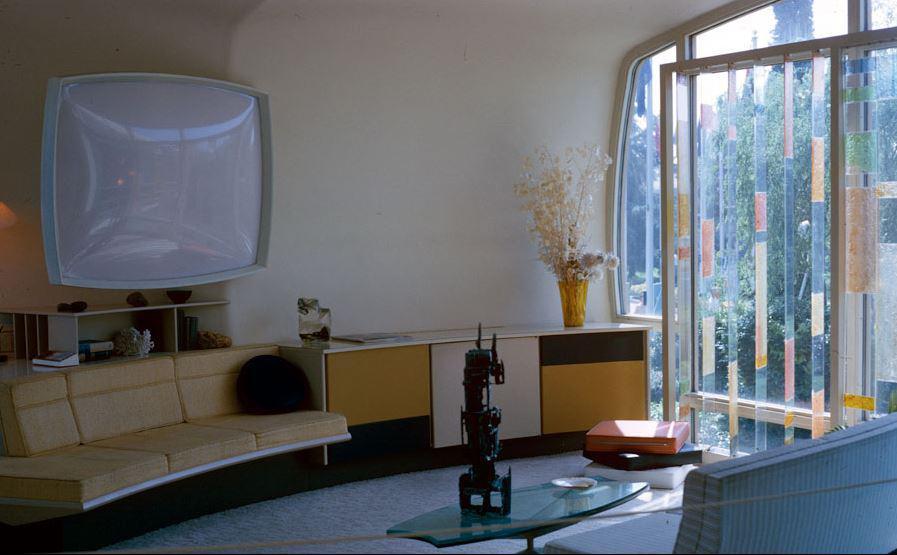
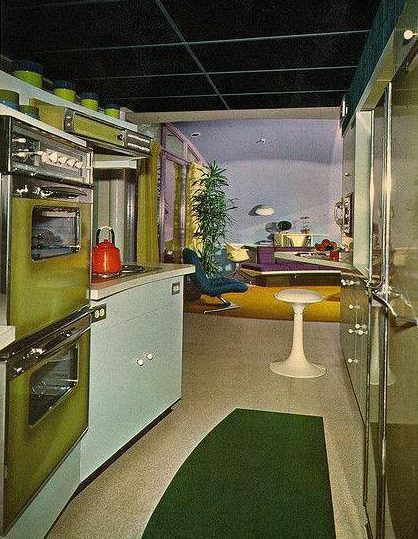
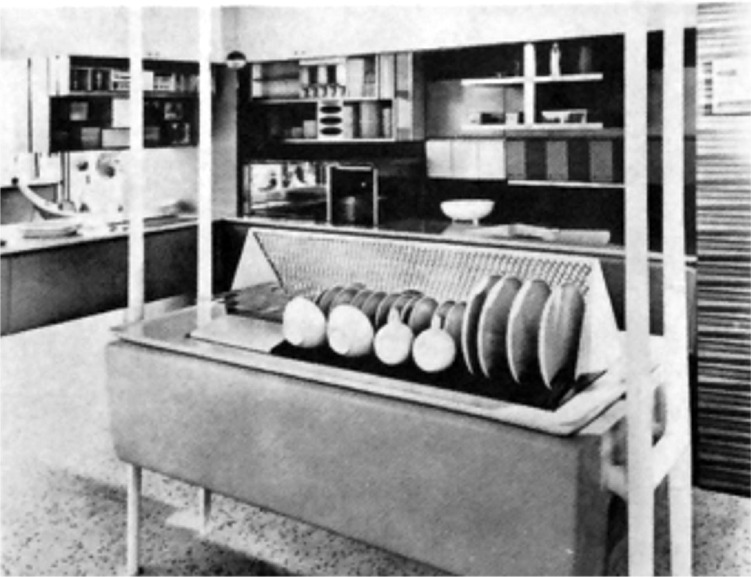
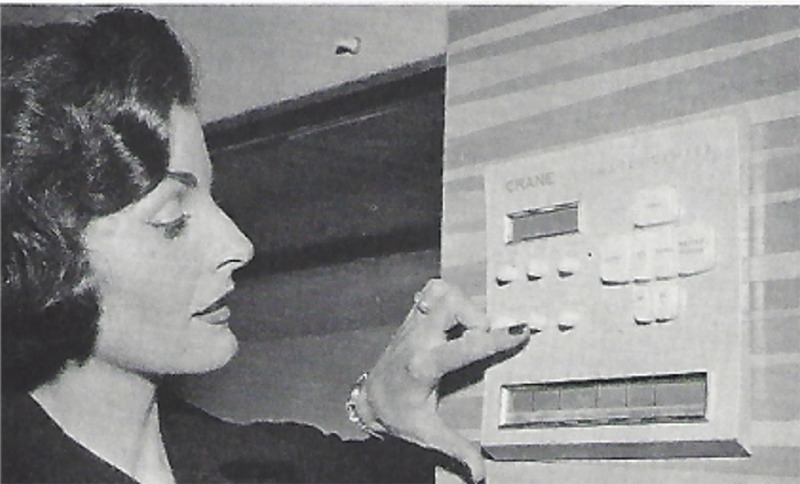
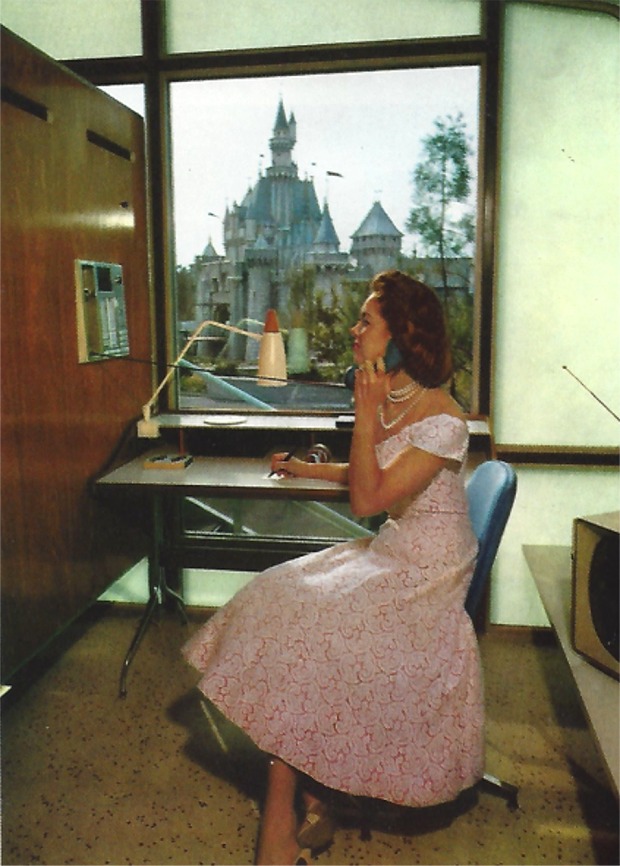
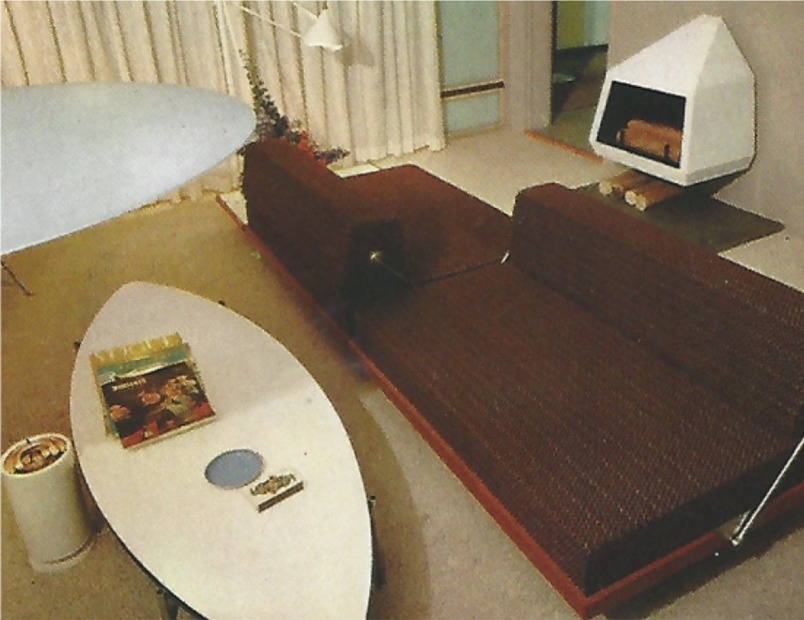
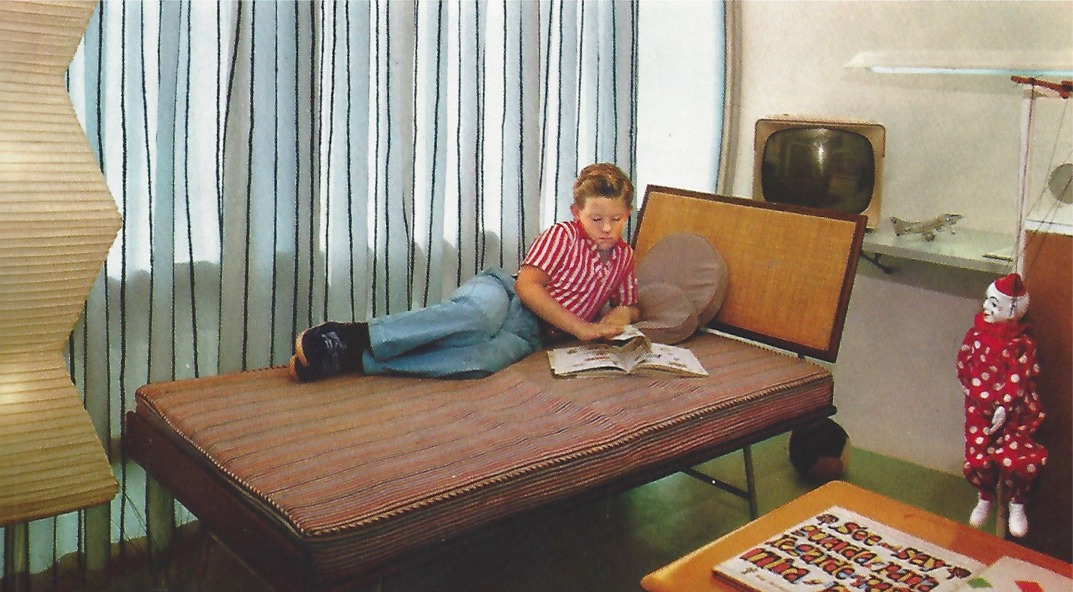
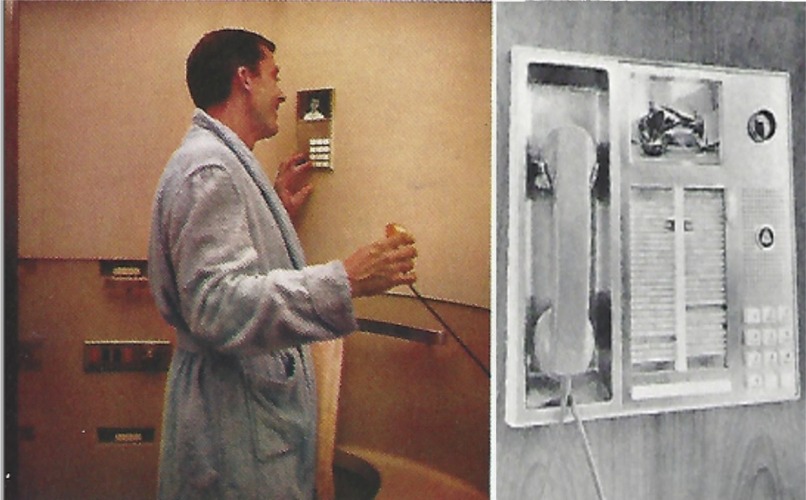
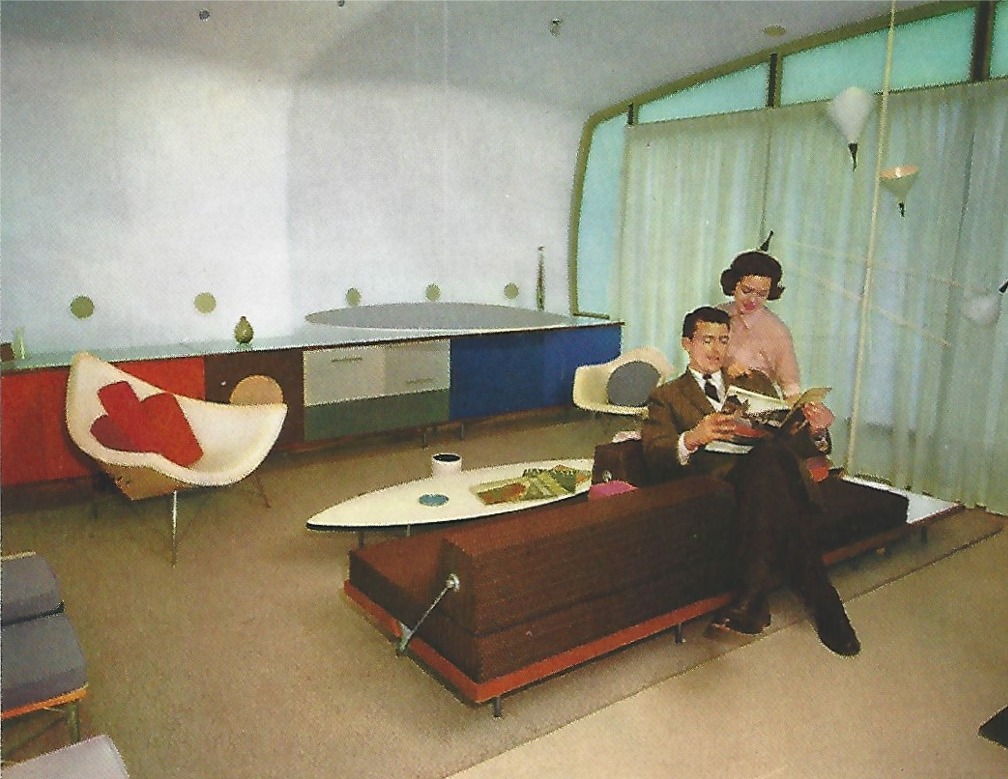
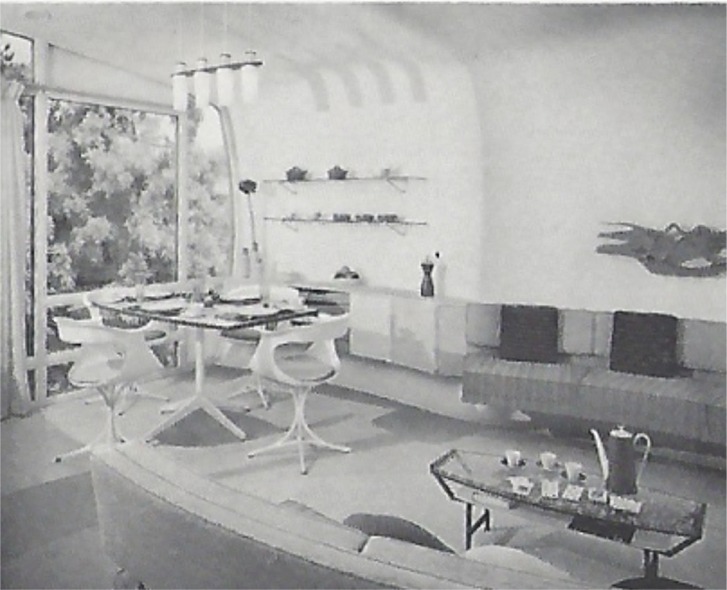
Furniture was made of vinyl and urethane curtains made of nylon. The most talked-about feature, was the microwave oven,Nobody believed you could bake a potato in 3 minutes, said attendant Dick Mahoney.
By 1967 the future had caught up with the house, so preparations were made to tear it down. But it was so well built that when the wrecker's ball struck the house, it merely bounced off. Eventually, the demolition experts had to take their saws and crowbars and pry the place apart piece by piece.
The house had 4 wings each 8 feet tall and 16 feet wide and could support 13 tons. And covered1280 square feet
Water pond in front was part of the building's cooling system
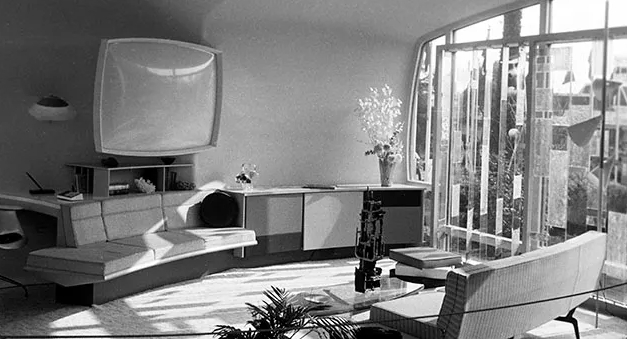
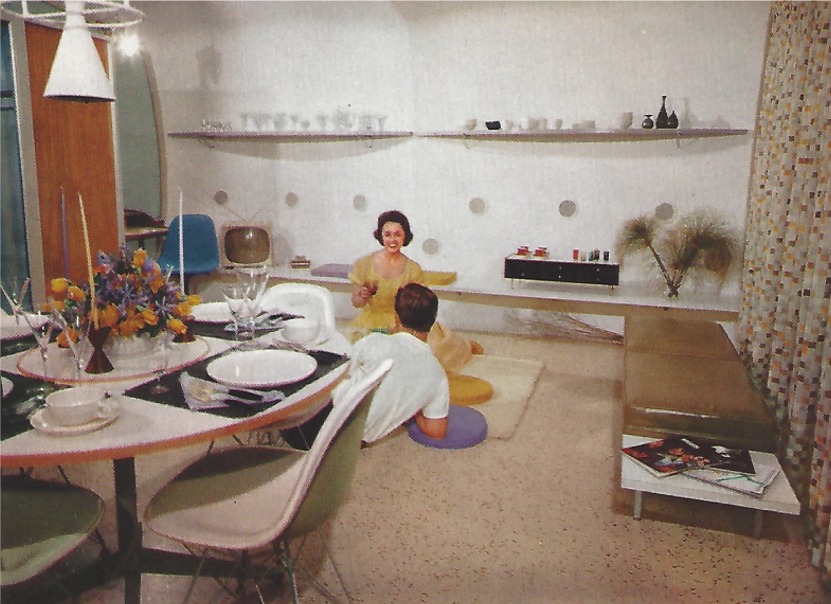
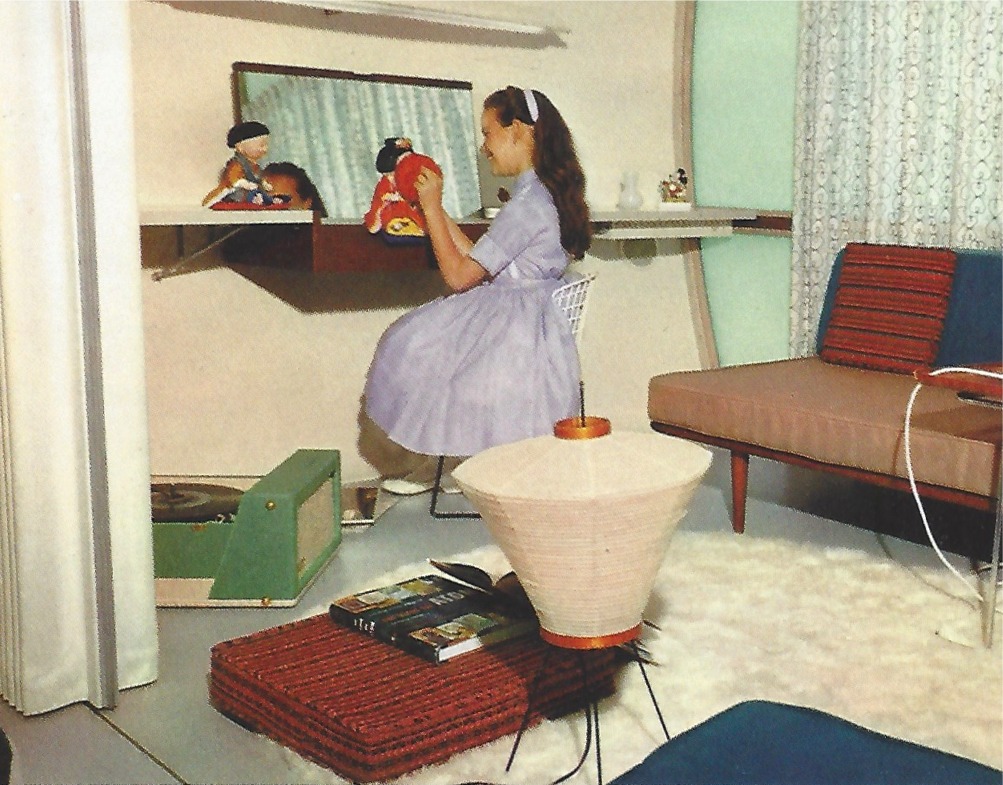
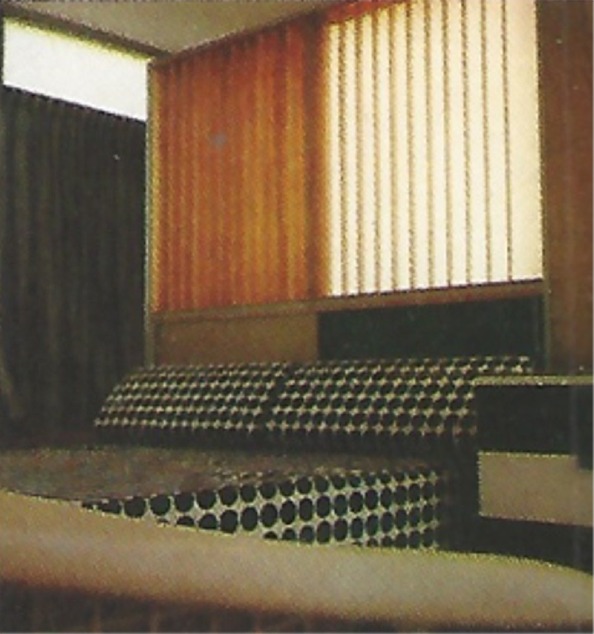
Furniture was made of vinyl and urethane curtains made of nylon
M.I.T. helped design the house.
Over 20 million guests visited the house
The Foundation was never removed it is now a planter
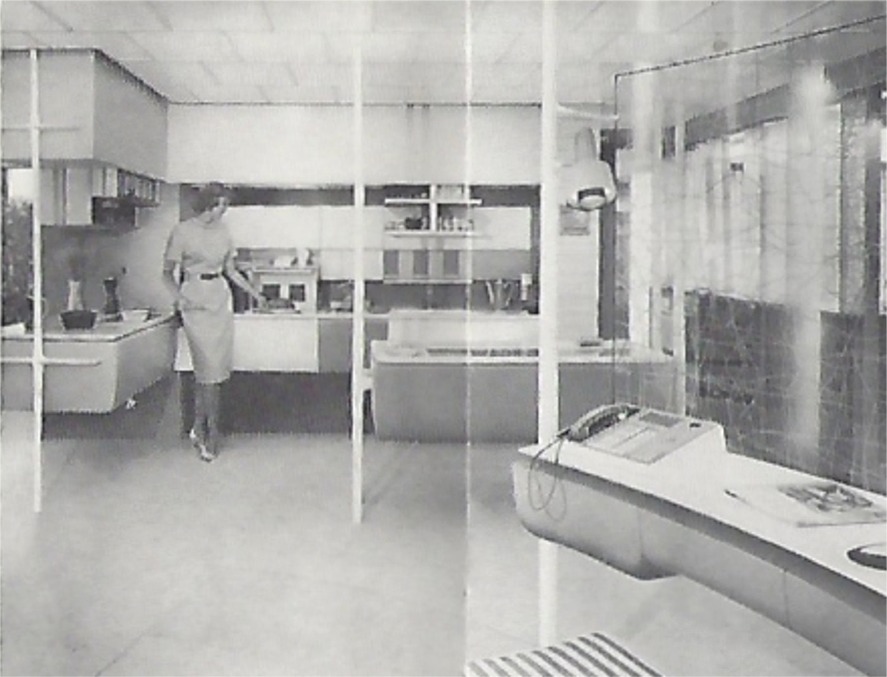
The most talked-about feature, was the microwave oven. "Nobody believed you could bake a potato in 3 minutes," said attendant Dick Mahoney.
Introduction
This is a demonstration home that is not for sale. Many people who visit the Monsanto Home of the Future ask: when and where can I buy a house like this one? Monsanto does not plan to make, or to sell, the home of the future. And it is impossible to say when it will be available commercially, if at all. However, it is expected that when the new ideas and forms embodied in the house are proved out, many of them will be adapted by architects, engineers, builders, and building supplies to their own needs. The home of the future may well be the forerunner of the home which will be common ten years from now.
The Monsanto Home of the Future has been constructed almost entirely of plastics. However, the use of plastics in construction is not limited to the family residence. Plastics may be utilized equally well in constructing factory and office buildings, stores, and all kinds of commercial structures.
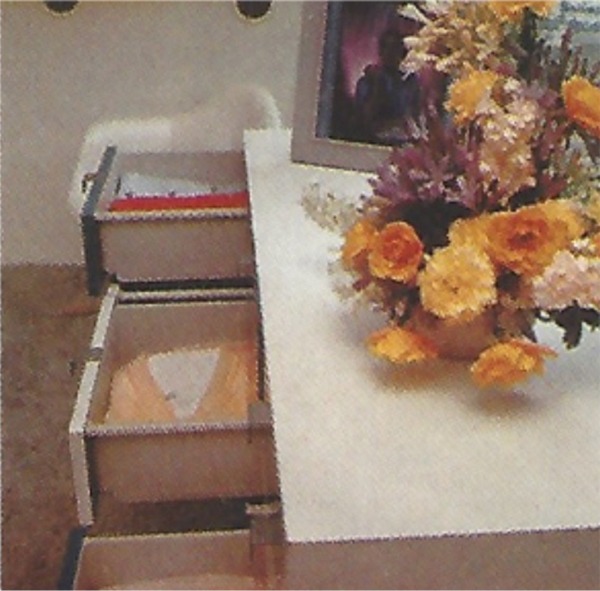
A good example is the Monsanto laboratory building in St. Louis. Here, plastics are used extensively with functional, as well as attractive, results. Plastics are used to face building blocks and structural panels on the exterior. They are used for pipes, drawer liners, walls, ceilings, floors, and even in the new highly efficient vent fans. This building, and the Monsanto Home of the Future here in Disneyland, are serving as proving grounds for plastics technology. They stimulate creative thinking and feed back continual streams of practical information for those concerned with improved construction techniques.
Main Exhibit:
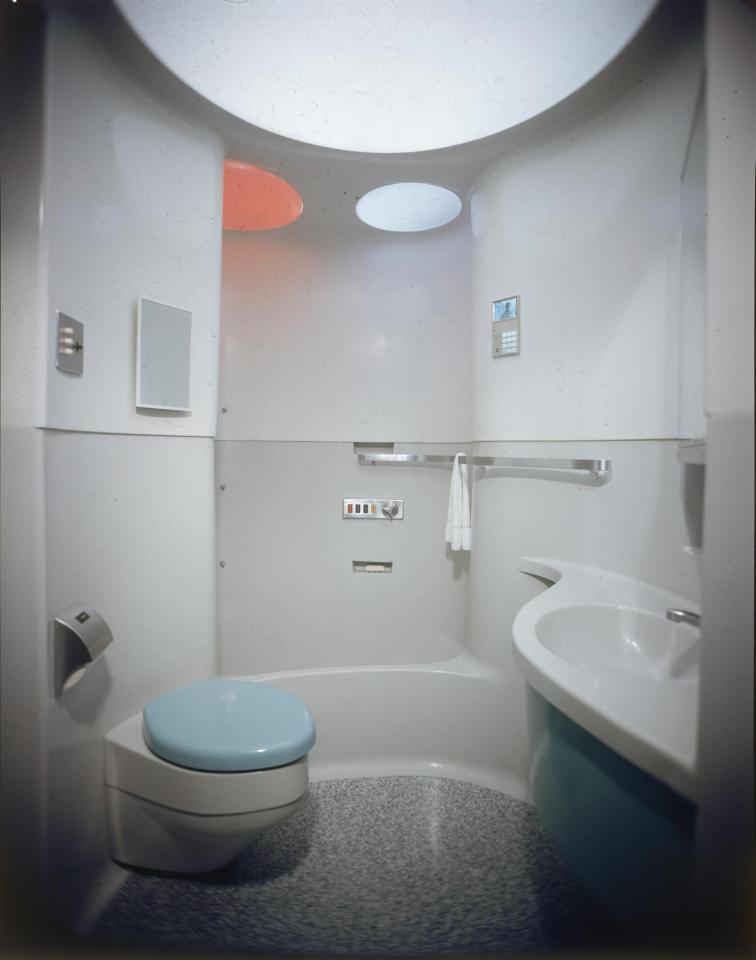
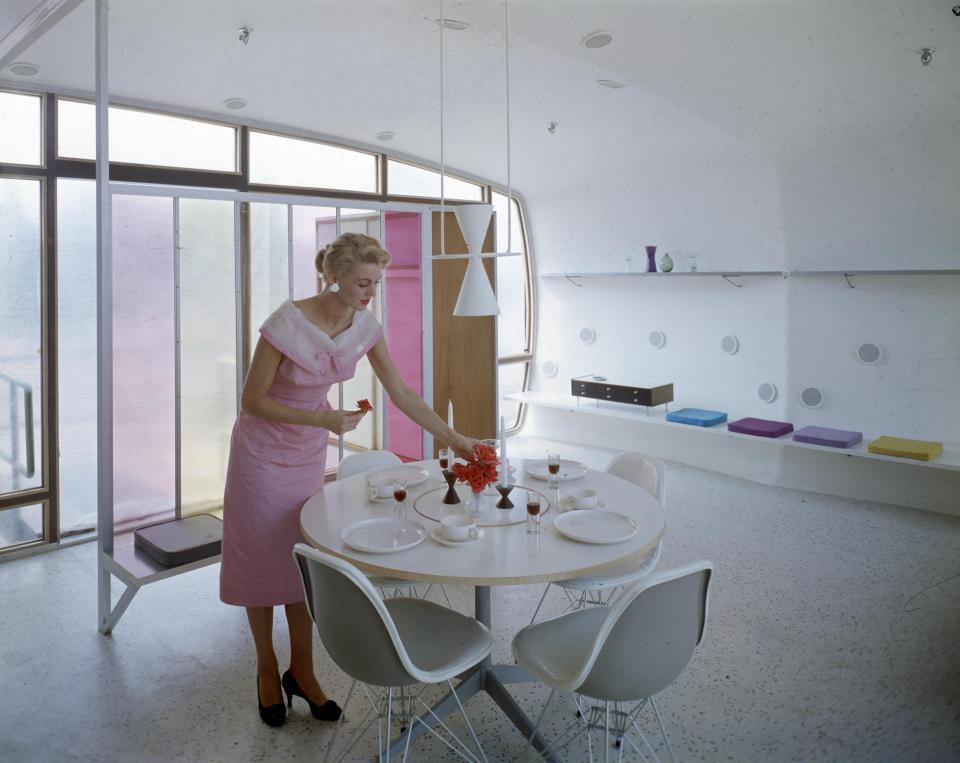
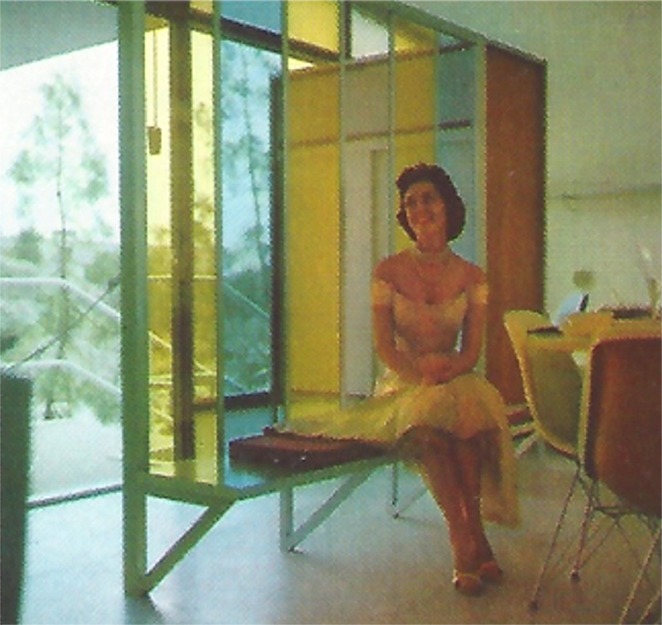
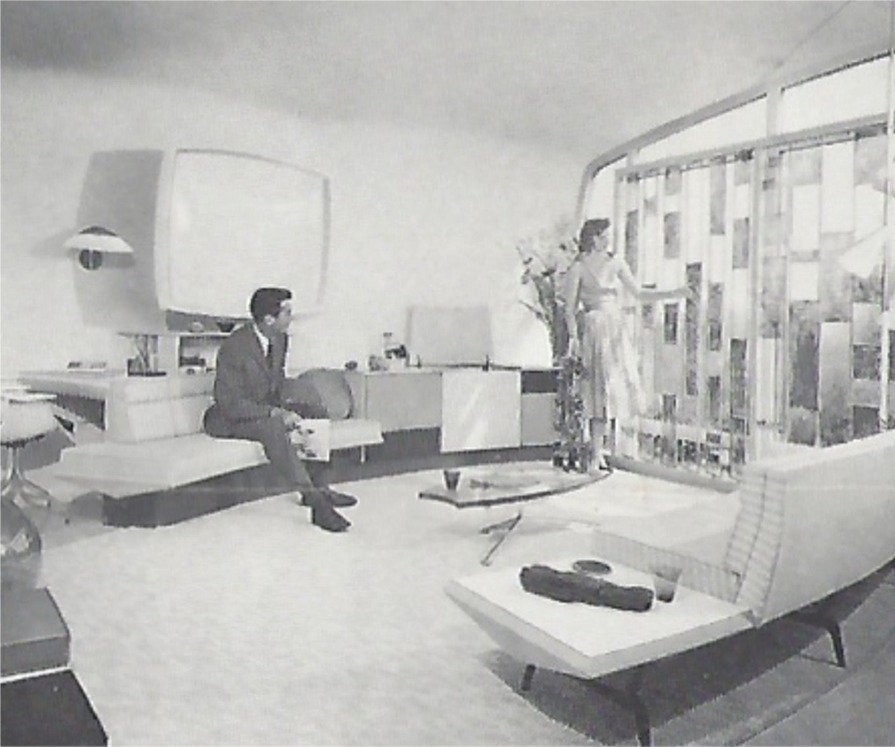
Welcome to Monsanto's plastics Home of the Future! As you entered this experimental model home, perhaps you noticed that the house itself is constructed entirely of plastics. Despite the graceful lightweight appearance of the suspended wings of this house, each one is able to support more than 13 tons. The floors on which you are walking, the gently slopping walls around you, and even the ceilings are made of plastics. Furnishings and equipment, as well as the house itself, are almost 100% manmade. Hardly a natural material appears in anything like its original state anywhere in the building
The Home of the Future is the only one of its kind in the world. The project was conceived more than 10 years ago during a plastics research program, financed by Monsanto, at the Massachusetts Institute of Technology. In effect, you, the visitor, are part of this continuing research program. You are one of more than 20 million visitors who have walked through this home. Yet, scientists and engineers who make periodic tests find that the house remains structurally sound. Imagine any other house having more than 20 million guests and still being able to boast the showroom freshness and sparkle you see here.
The architects who designed this house sought to develop a plan that would be logical from a stand point of everyday family living. Yet, at the same time, they were determined to create a home free from the pre-conceived notions of a house made from conventional building materials. Constructed of a few large parts instead of many small ones, the design takes advantage of the almost unlimited flexibility of plastics in building. Incidentally, about 25% of all plastics produced in the United States today go into construction and that figure increases each year.
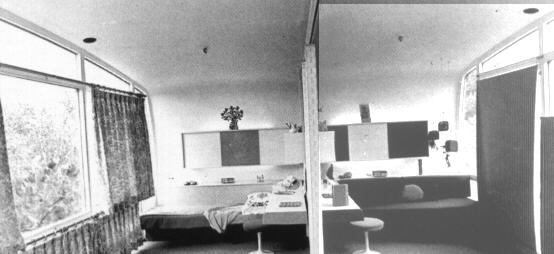
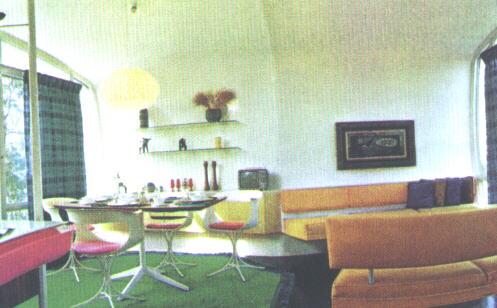
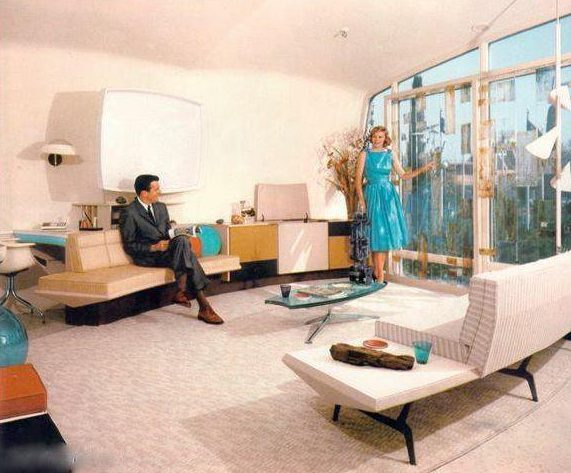
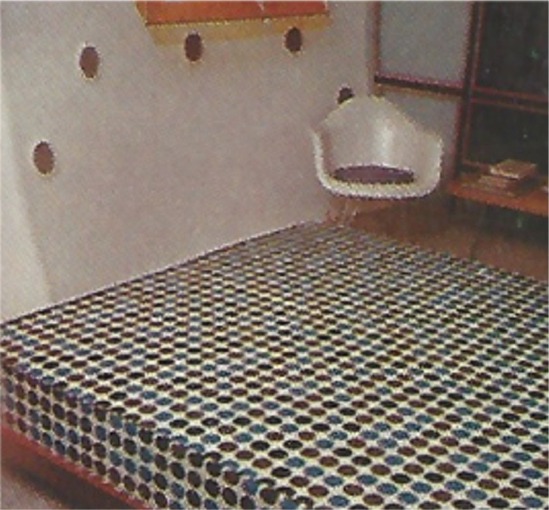
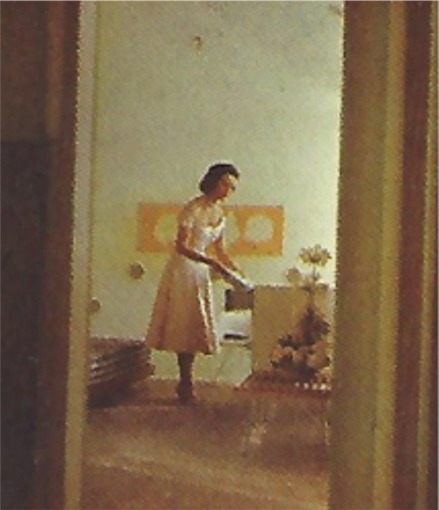
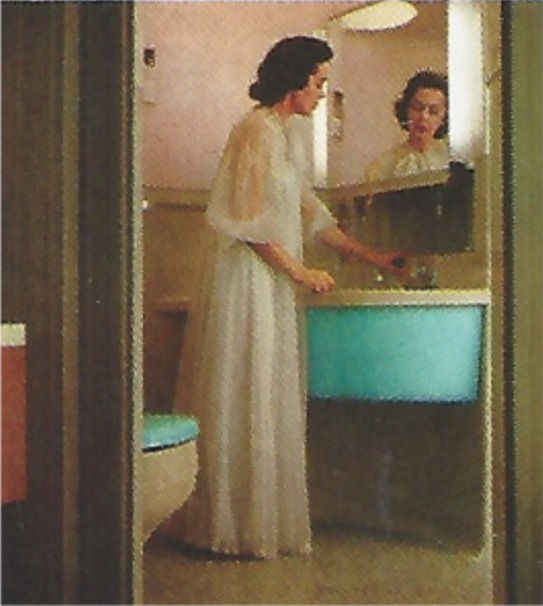
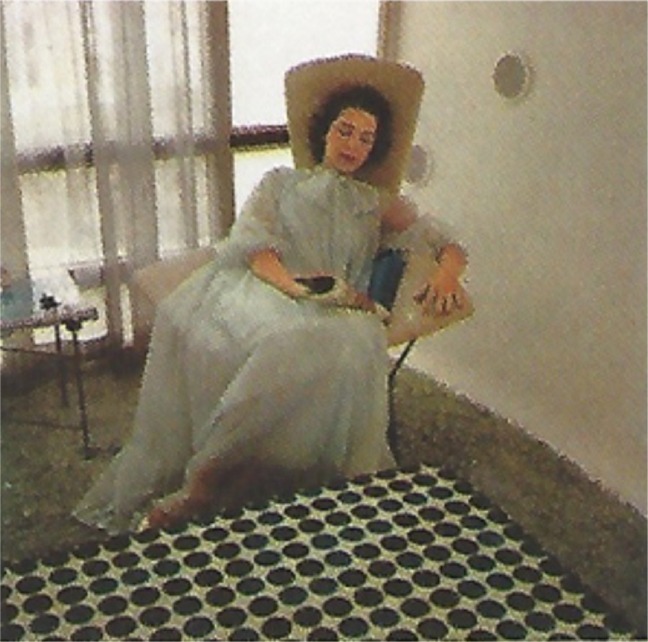
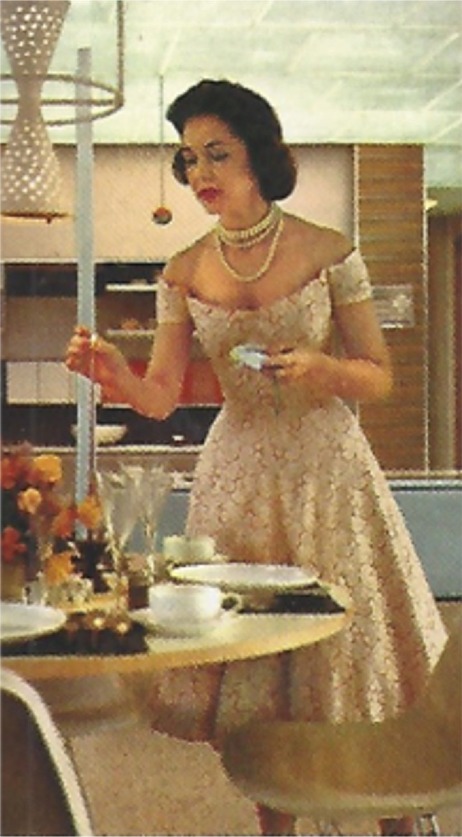
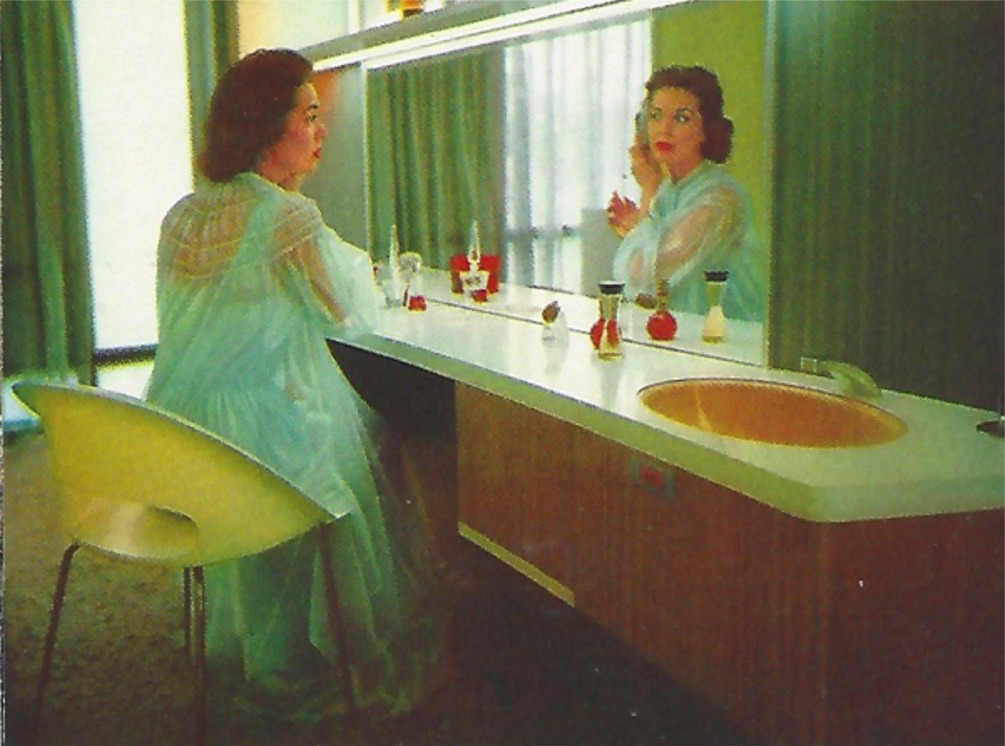
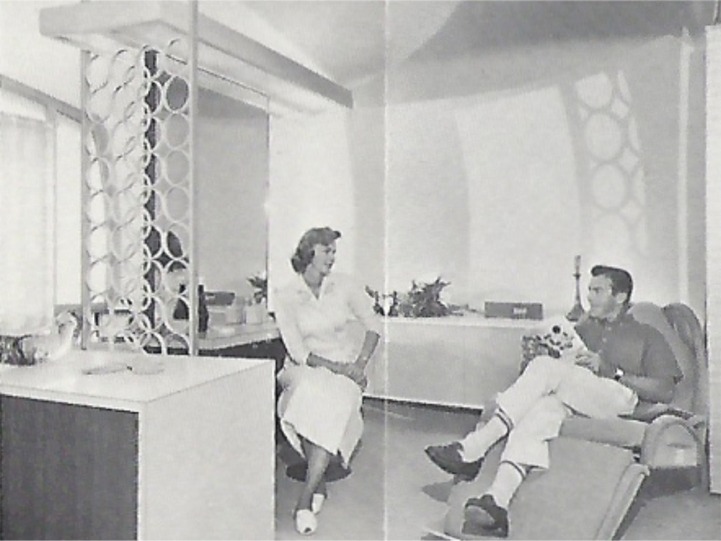
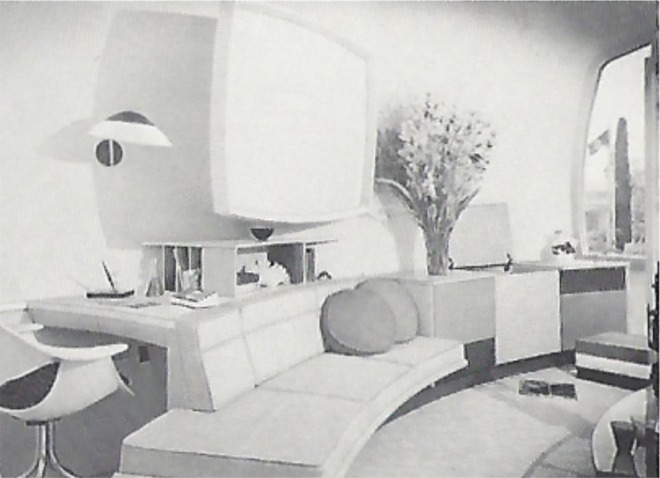
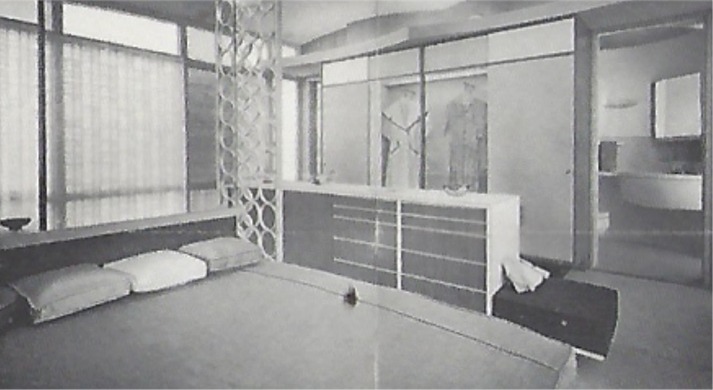
In addition to its dramatic departure from architectural tradition see how the home gives you a completely different feeling of flow in its interior design; how one area blends effortlessly into another. The floor of distinctively Cambrian vinyl Plouron features a thick vinyl sub-layer cushioned for underfoot comfort and quiet. Soft, gently curving surfaces replace conventional square, sharply angled room lines. Bright new ideas also are incorporated in the design and the shape of the furniture. Handsome, functional design has been combined with traditional beauty and elegance. Throughout the house there is a sense of uncluttered space without loss of warmth and charm. Gracious living and convenience are combined as never before.
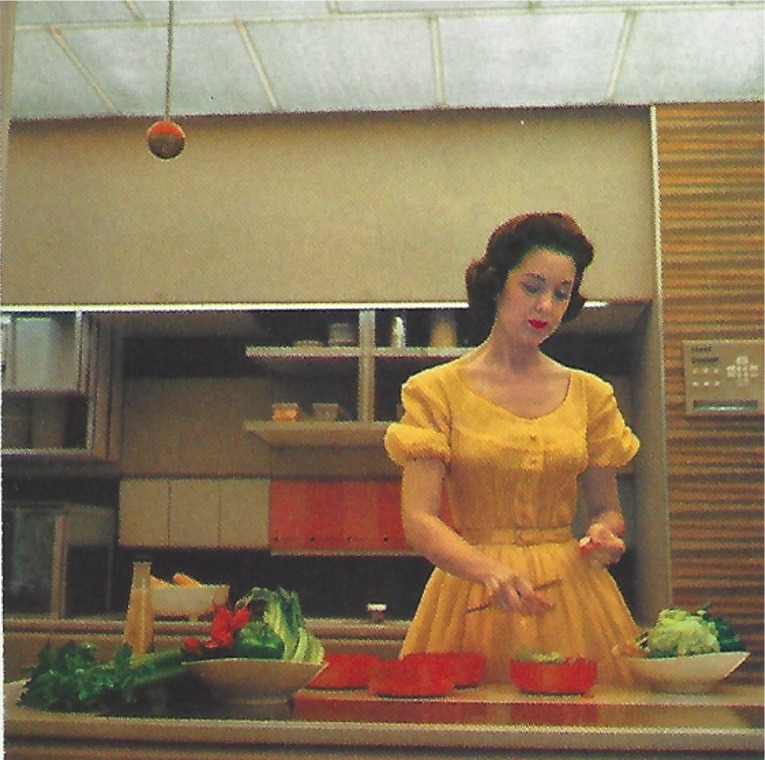
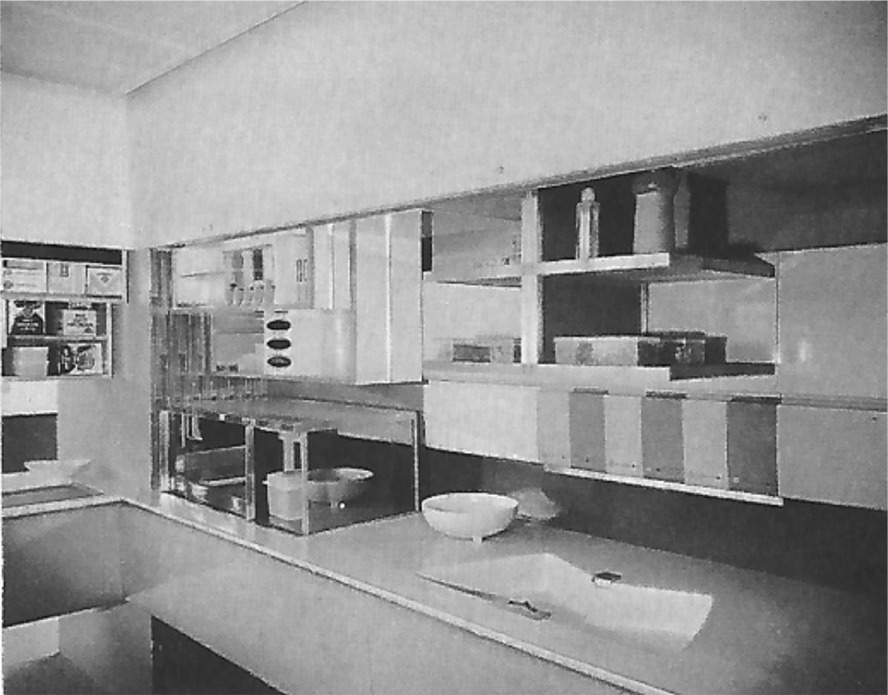
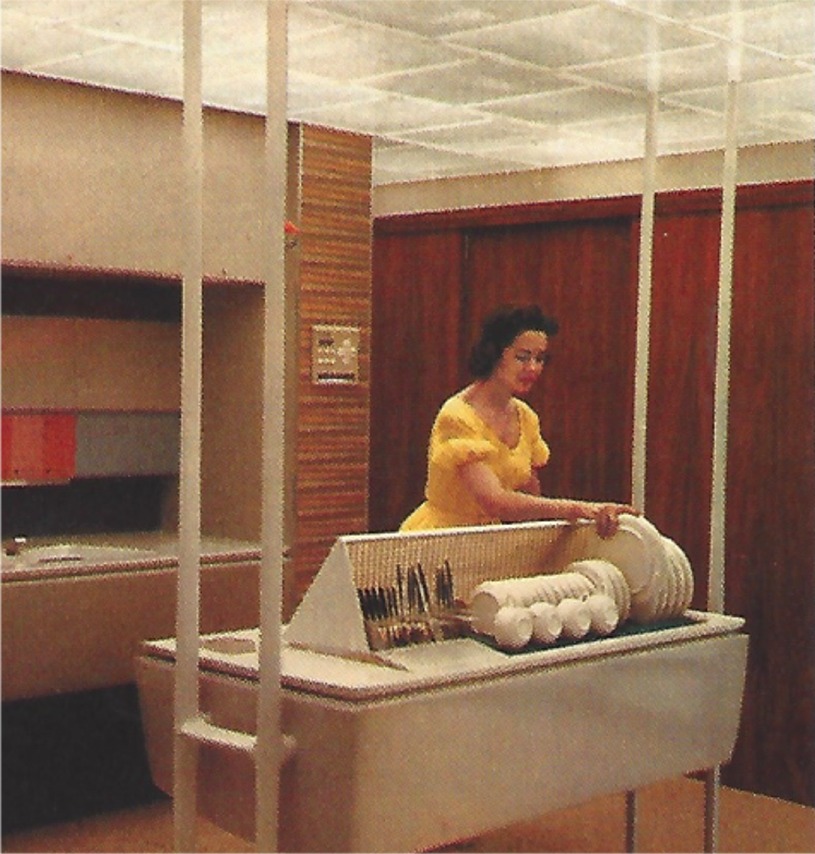
The versatility and the beauty of manmade fibers is demonstrated everywhere. Acralam is used in the luxurious and highly practical rugs and carpeting, and in the colorful and durable upholstery stretched fabrics. Note especially the deep fur like pile of the curved sofa in the living room. Lovely, soft, sheer casement fabrics are in combinations of Acetate, Rayon, and Nylon. Reliable and washable vinyl improved materials are seen in other upholstered areas. The carefree capabilities of plastics are seen in the General Electric kitchen. which is surfaced in decorative textilites. Rugged, easy to clean plastic laminates are used on all the counter, cabinet, and wall surfaces.
As you leave the Home of the Future, you will notice weather defying and man-made fibers have been used practically yet beautifully in the colorful outdoor living area. We hope you have enjoyed open house at Monsanto's plastics Home of the Future. Those of you who have visited us previously, know that many of the exciting uses of plastics you saw here before now have become commonplace in houses from New England to California. Next time you come to Disneyland, please be sure to visit us for a look at the dramatic new ideas you may anticipate for your own home of the future.

 Access To Over 3230 Construction Photos